Ships / Boats

Rock Dumping Offshore – Simon Stevin in Action

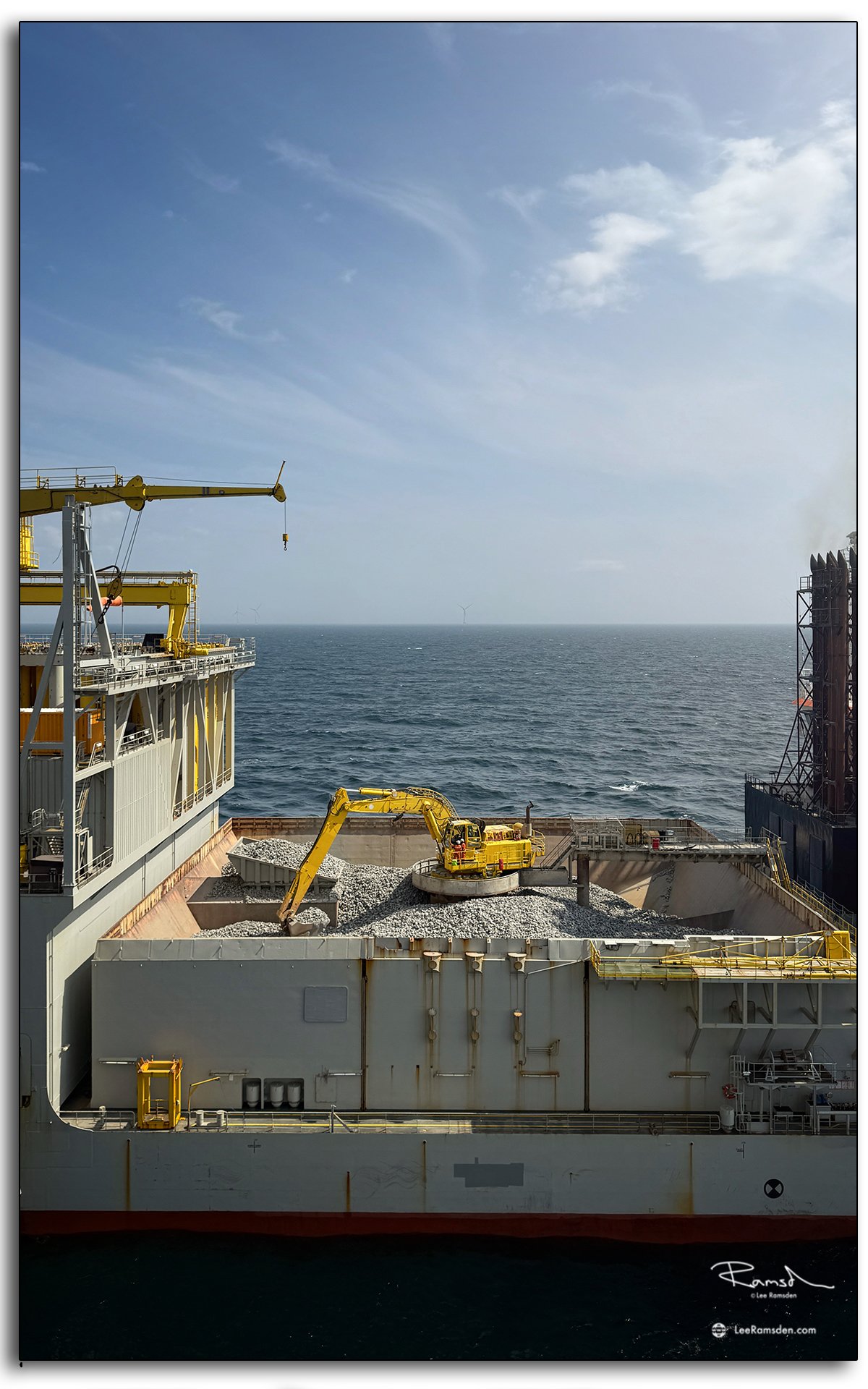
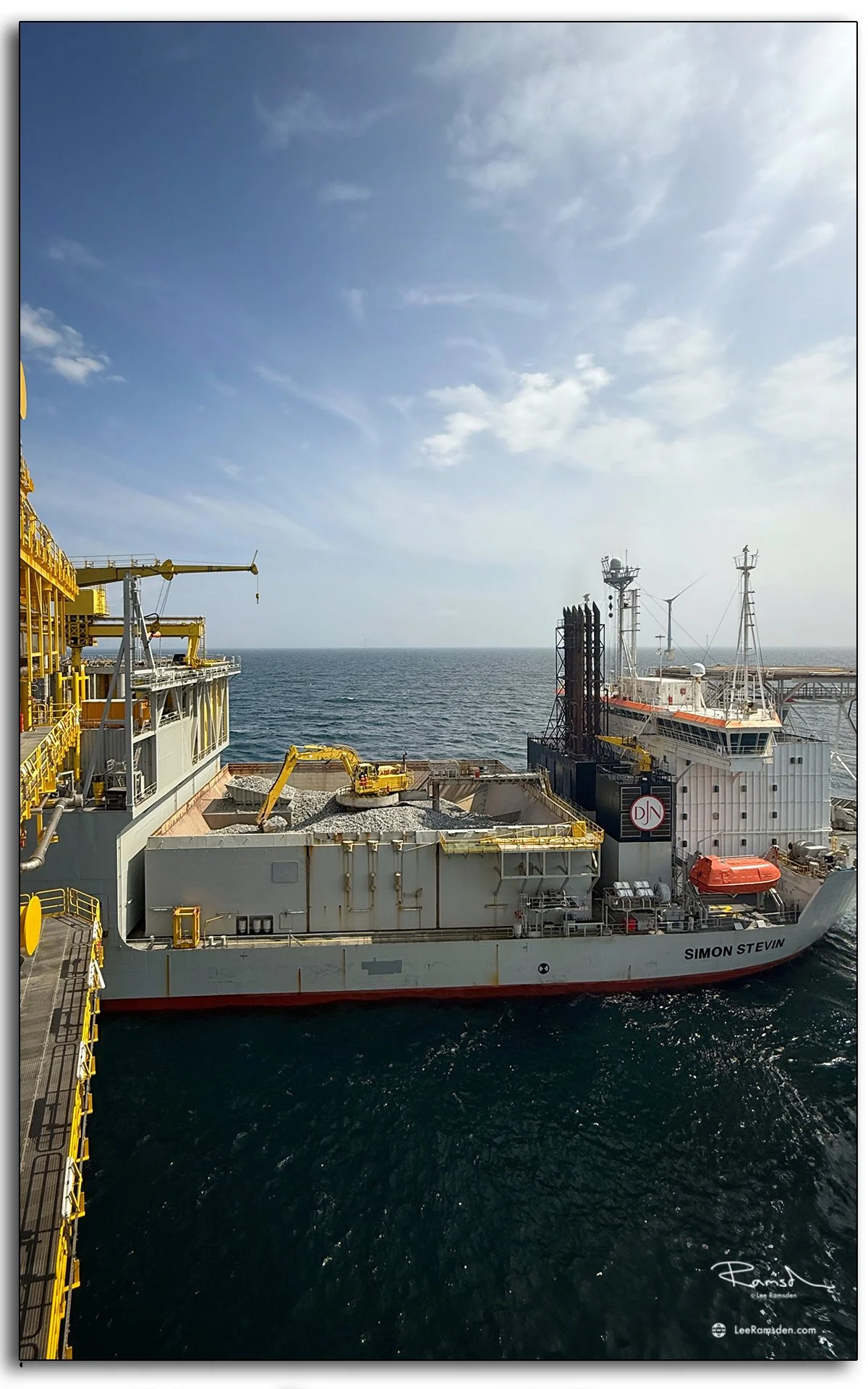
Wide view of Simon Stevin rock dumping vessel with platform and turbines in background
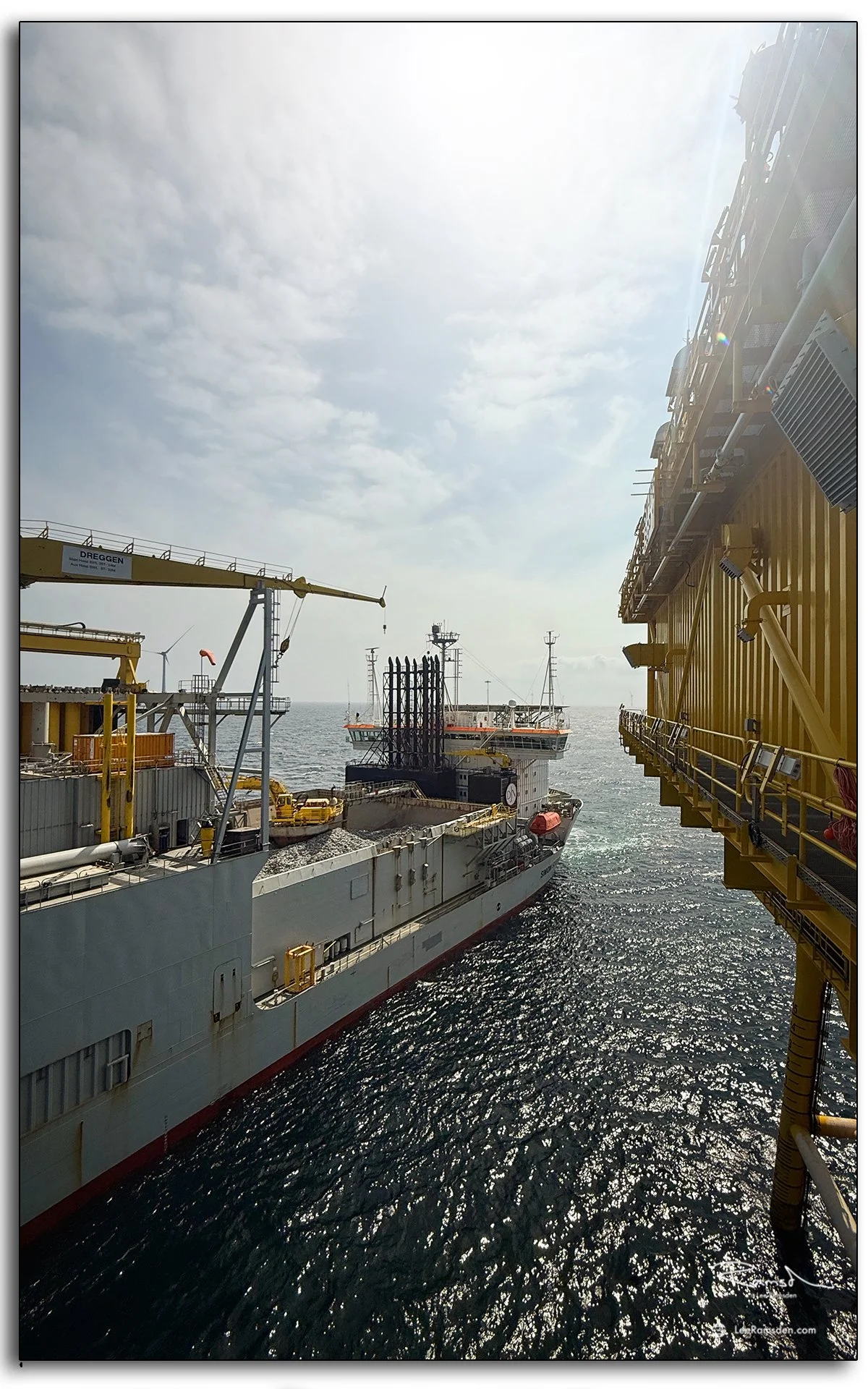
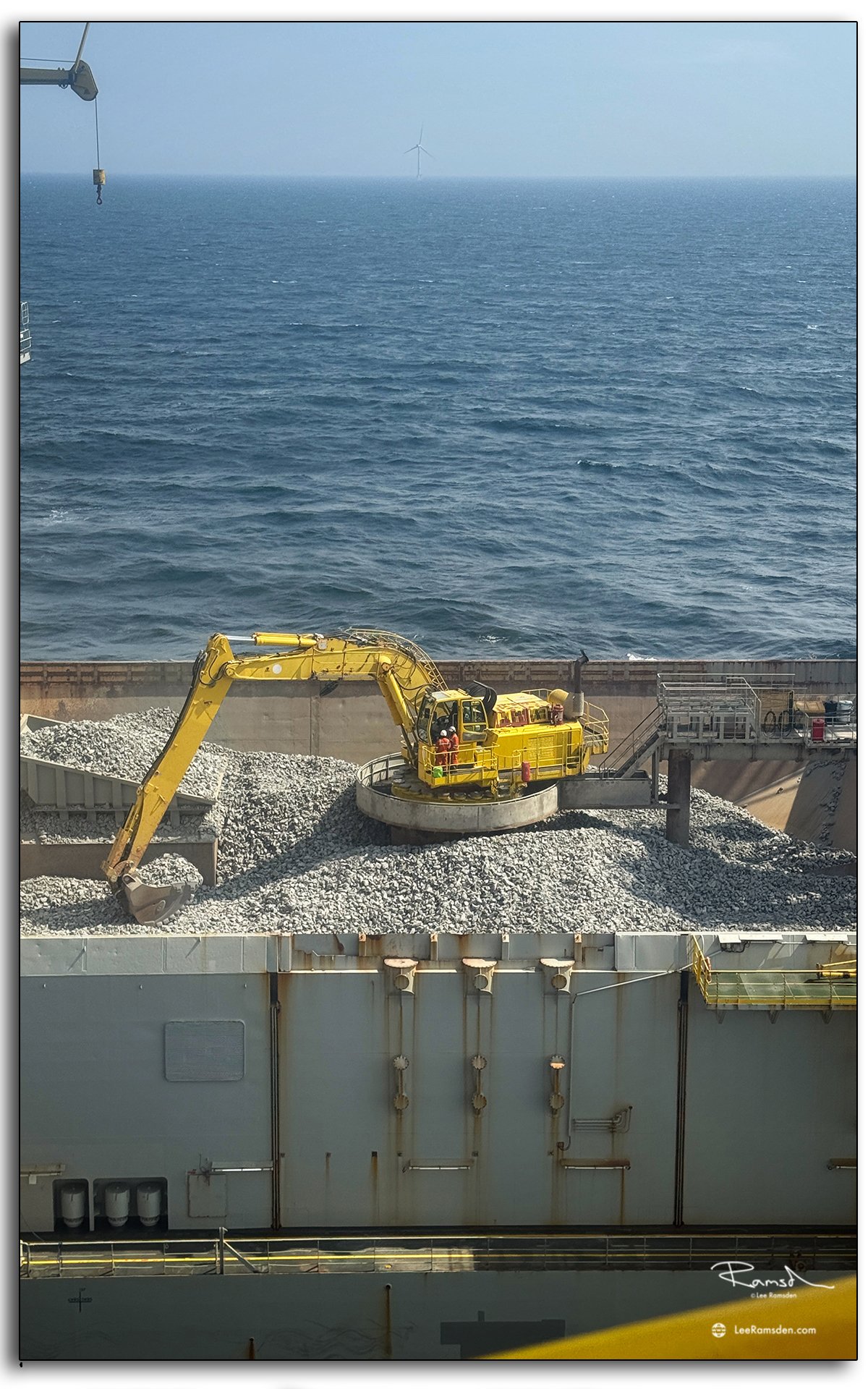
Mechanical digger working on rock load aboard Simon Stevin vessel, offshore wind farm backdrop

Working offshore brings no shortage of unique vessels, and the Simon Stevin is one that immediately stands out. Unlike the typical service or cable-lay vessels often seen on a wind farm project, the Simon Stevin is a fall-pipe vessel designed for precision rock placement on the seabed.

In these iPhone images, the ship was in the field carrying out rock dumping — a process used to stabilise subsea cables, pipelines, and seabed structures by placing graded rock exactly where it’s needed. What makes this vessel particularly striking is its setup: a mechanical digger operating directly onboard, shifting and managing rock in the ship’s holds before it’s funnelled down via fall pipes.

Rock dumping offshore with the Simon Stevin vessel – precision engineering, seabed stability, and a digger at sea in the North Sea wind farm field.
Close-up of excavator on Simon Stevin ship moving graded rock offshore

Seeing a digger at work on deck, framed by the North Sea horizon and turbine towers in the distance, is a reminder of the scale and engineering creativity that support offshore wind. While turbines are the most visible symbols of renewable energy at sea, vessels like the Simon Stevin play a quieter but equally vital role in building and protecting the infrastructure below the waterline.

From a photographer’s perspective, the contrast of industrial yellow steel, mechanical precision, and open sea makes for compelling compositions — an insight into a side of offshore operations that isn’t often documented.

This project continues to show the diversity of offshore life — from the towering turbines to the specialised vessels that make it all possible. For more on the working side of renewables, explore my Wind Industry portfolio.

SOV Vessel and Offshore Wind Turbines – A Dramatic North Sea Scene

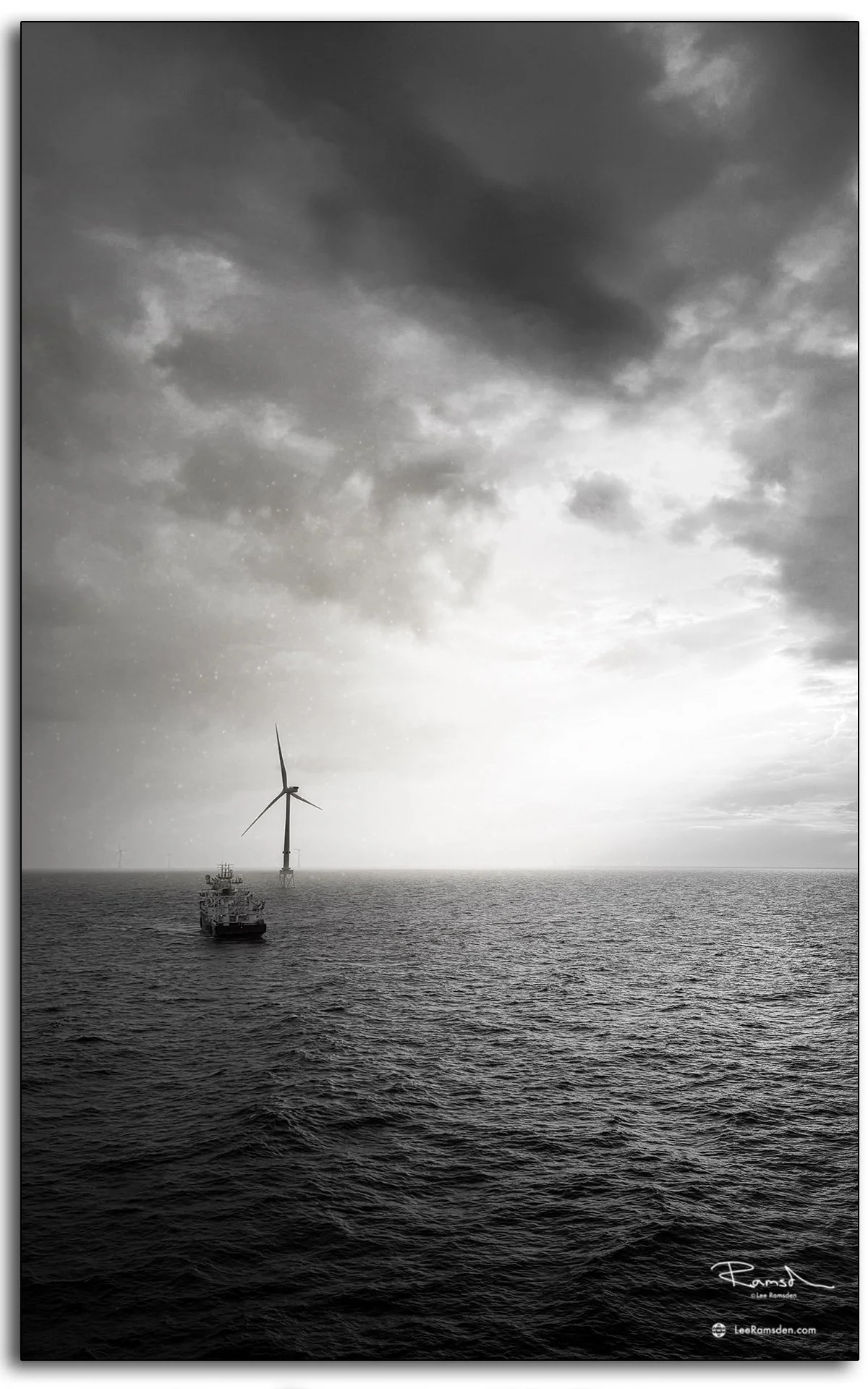
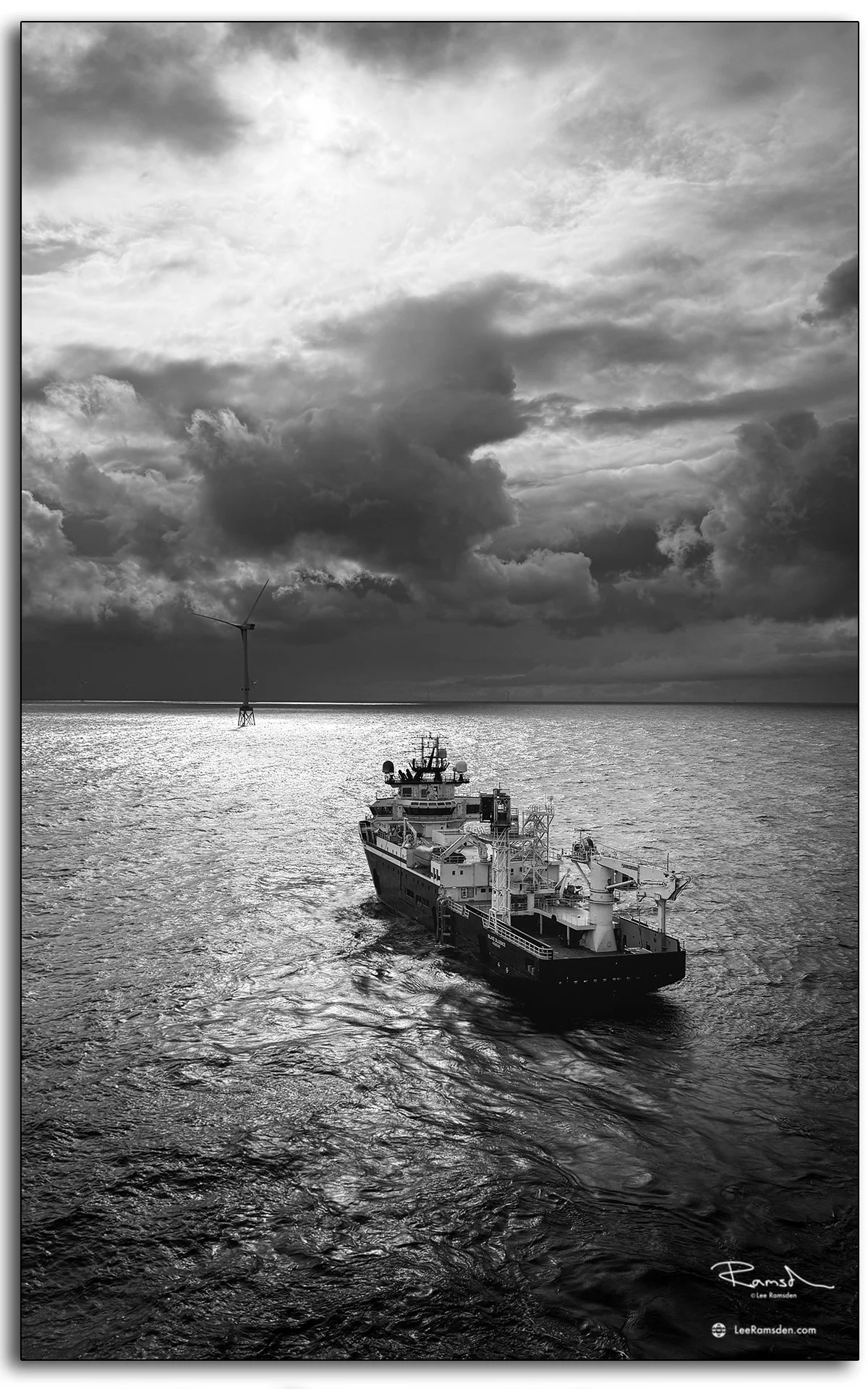
Striking black and white photo of Island Diligence with offshore wind turbine under dramatic skies in the North Sea.
Moody black and white seascape of Island Diligence vessel with offshore wind turbine in the North Sea.

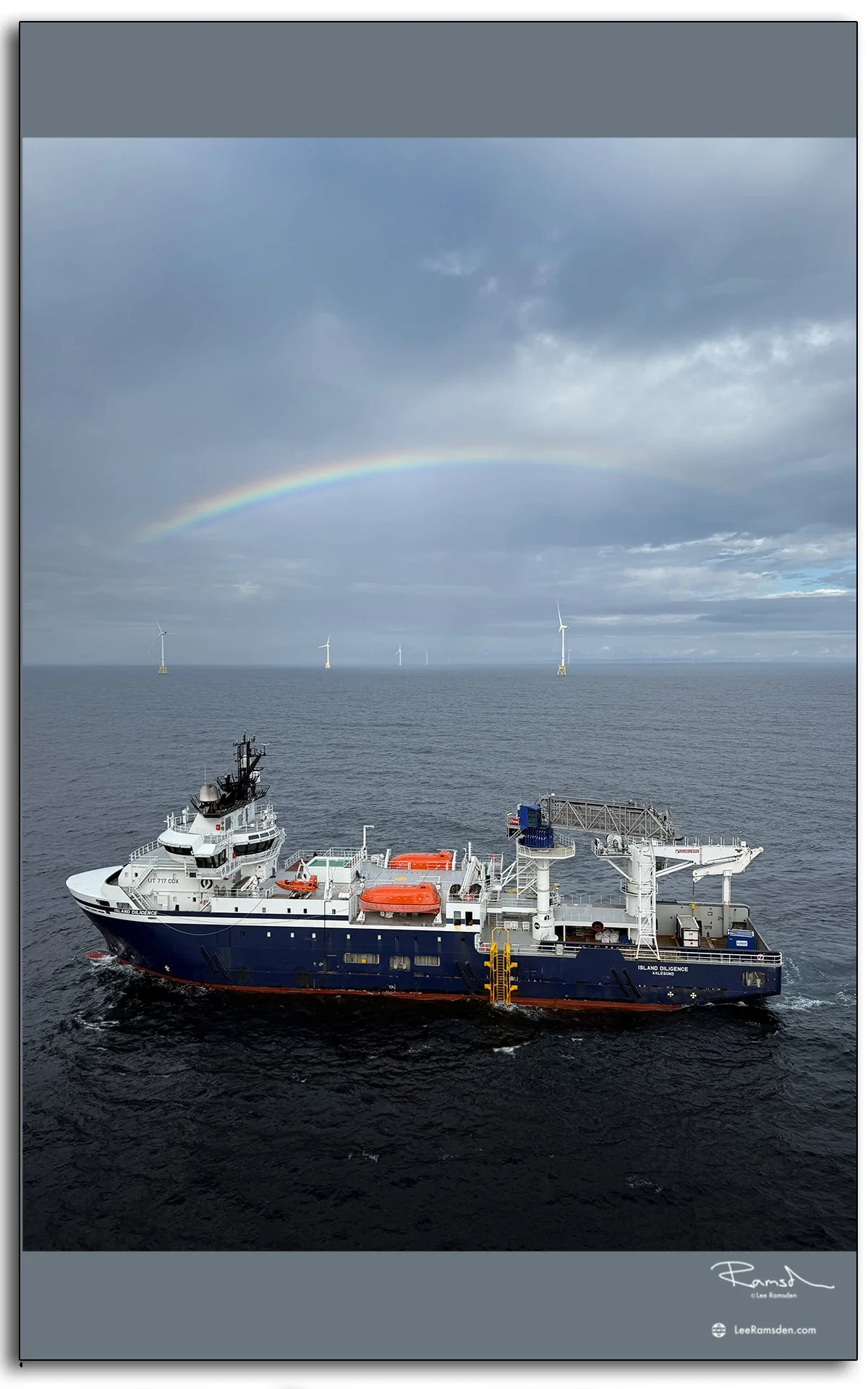
Out in the North Sea, moments like these capture the essence of offshore work – a dynamic mix of weather, engineering, and raw seascape. The Island Diligence, framed against towering wind turbines, feels both small and powerful, holding its own beneath the vast skies.

The heavy clouds and broken sunlight add weight to the images, a reminder of the ever-changing nature of offshore life. From dramatic skies to the still determination of the vessels and turbines, these scenes are never the same twice – which is why I’m always drawn to photograph them.

Photography offshore often blends the unexpected with the industrial – moments that are raw, dramatic, and fleeting. You can see more in my Wind Industry gallery, or explore other Industrial photography across my portfolio.

Norwind Storm at Work

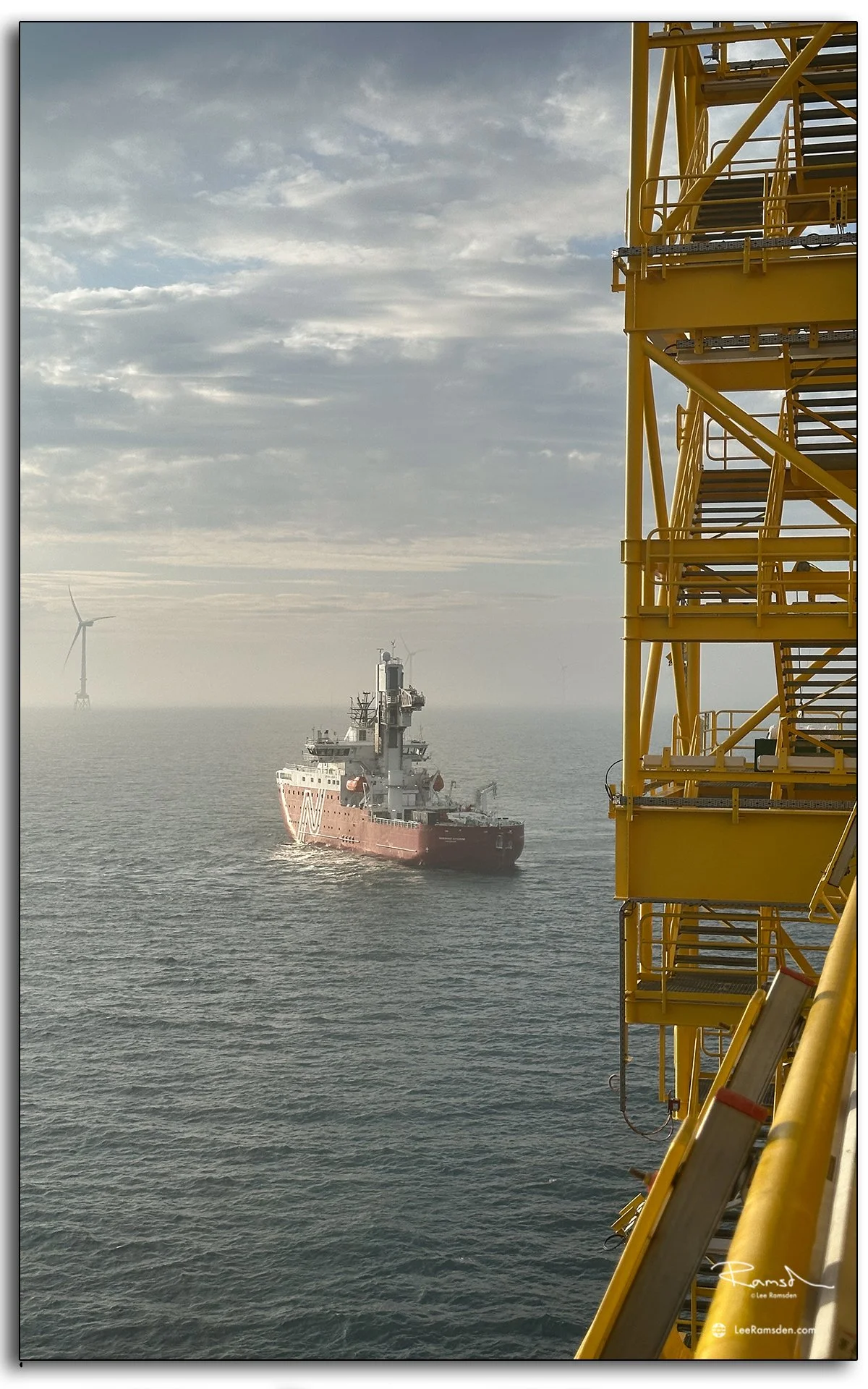
Norwind Storm offshore support vessel approaching a wind farm substation in the North Sea
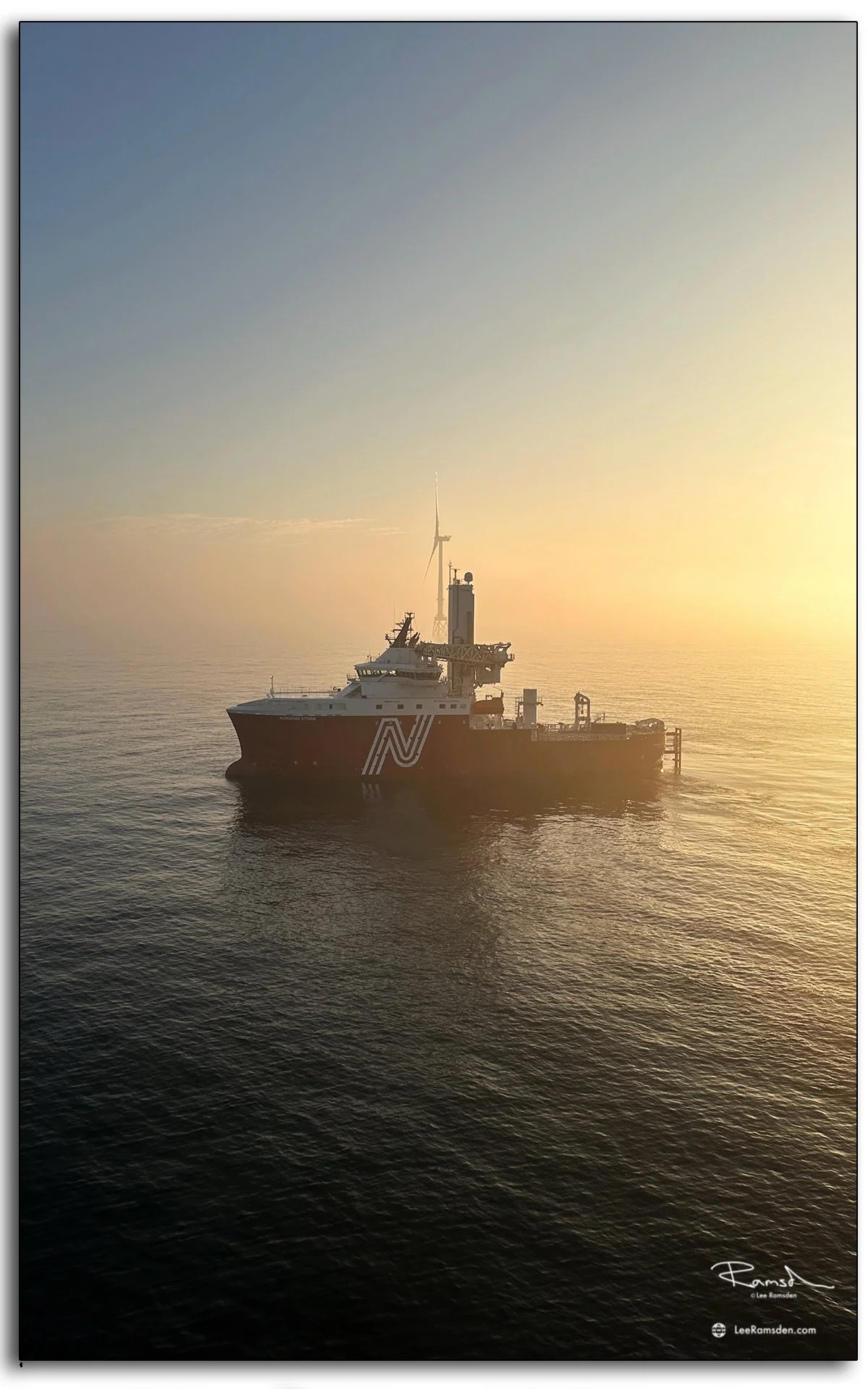
Norwind Storm vessel at sunrise with wind turbines on the horizon, captured in the North Sea

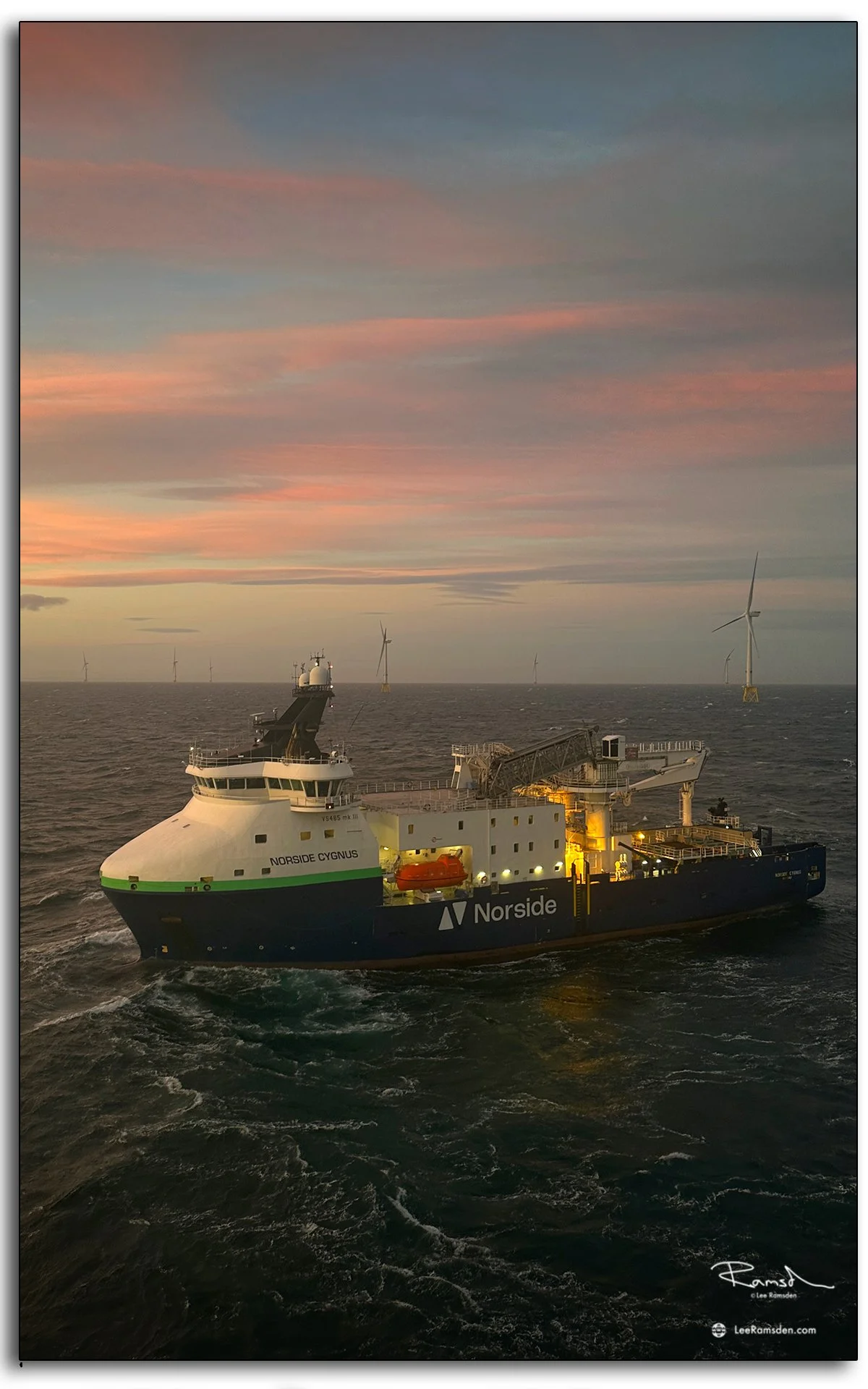
Out in the North Sea, the Norwind Storm is a familiar sight—steady, purposeful, and always where the work is. These iPhone images capture the vessel alongside the offshore substation, with the wind turbines fading into the haze and the low sun throwing golden light across the water.

From the deck or framed against the open horizon, the Storm stands as a reminder of the constant effort behind the offshore wind industry. The scale of the operation is immense, yet moments like these bring out its quiet beauty.
See more of my work in the Wind Industry portfolio.

Offshore Walk-to-Work Transfers

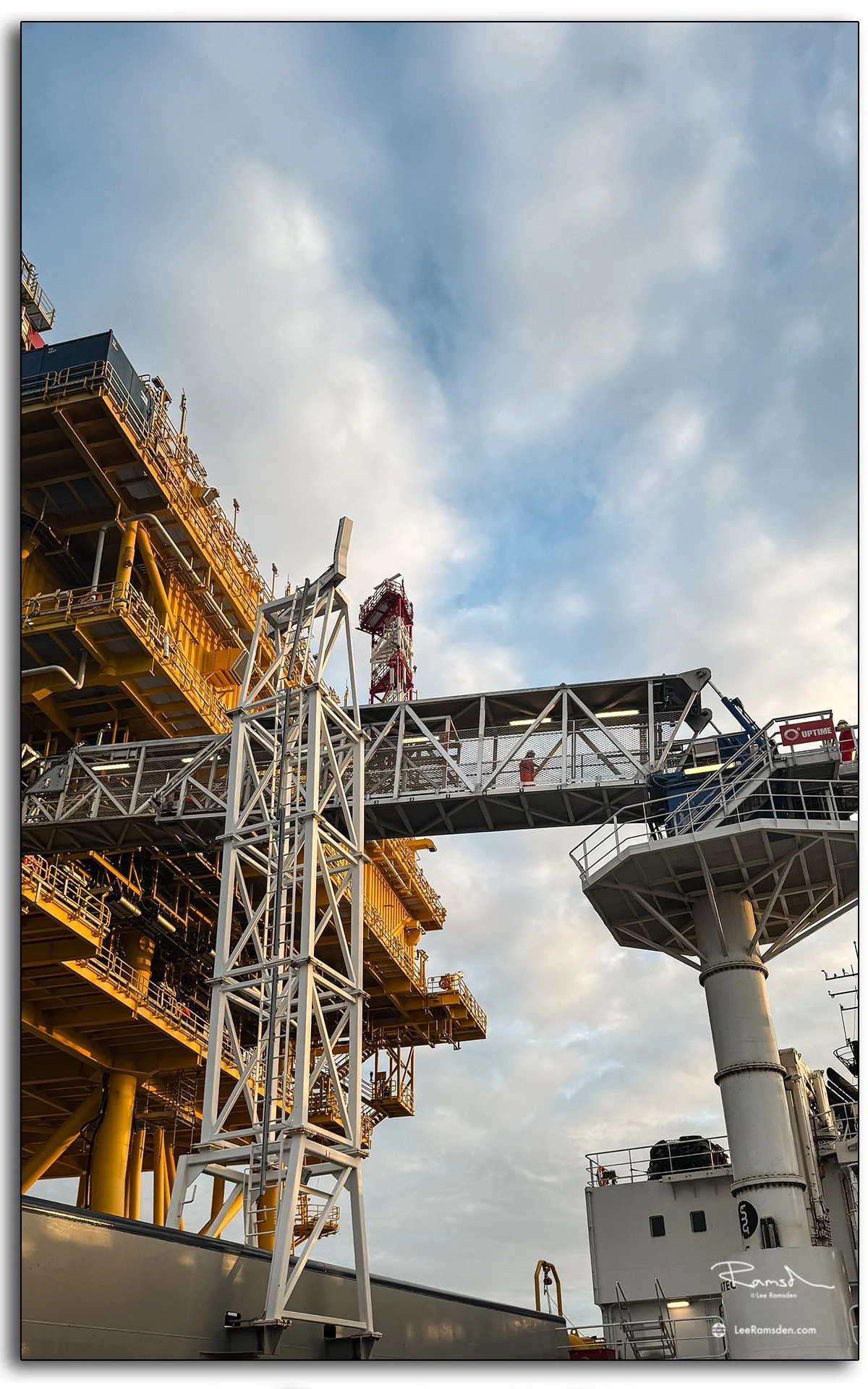
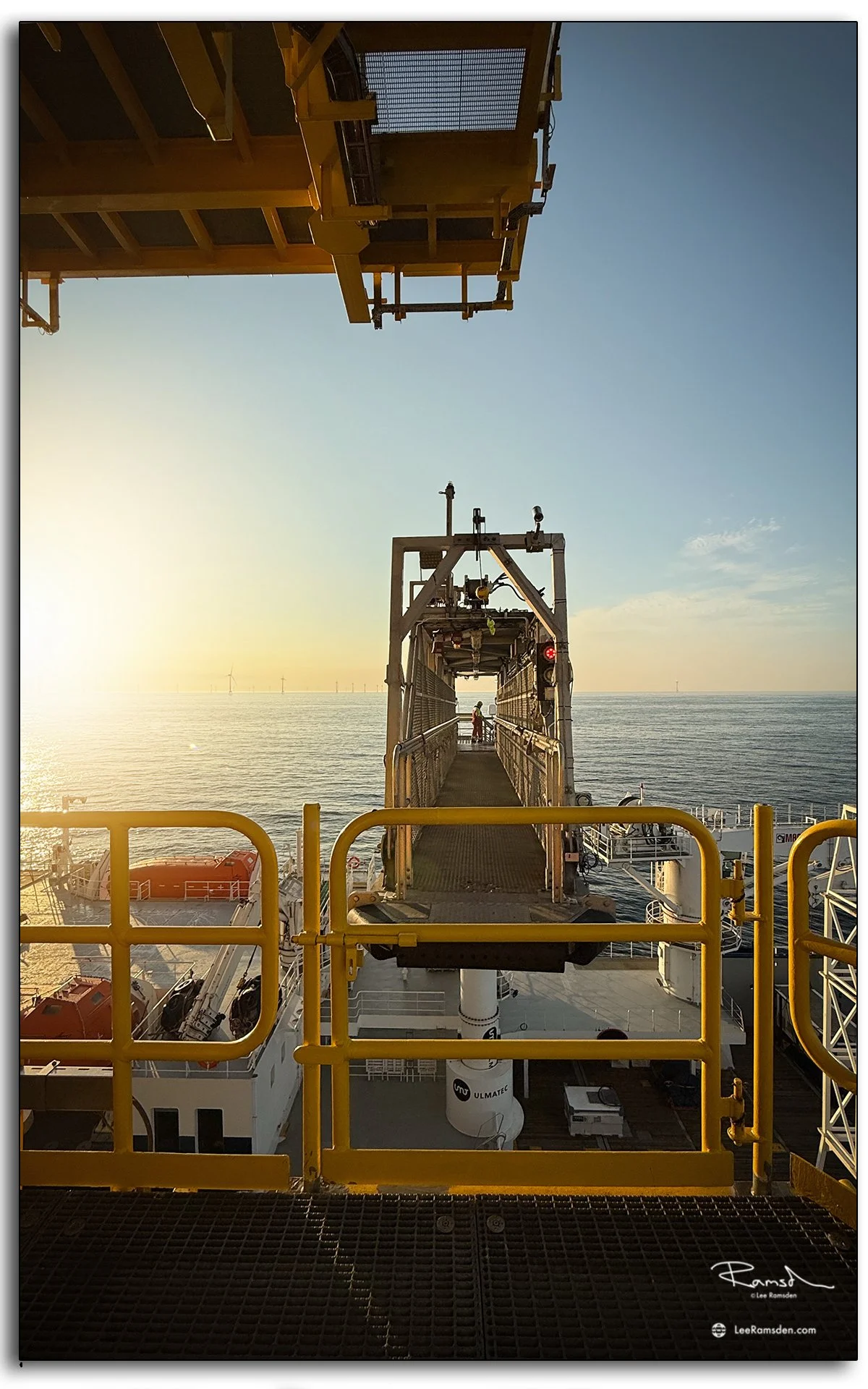
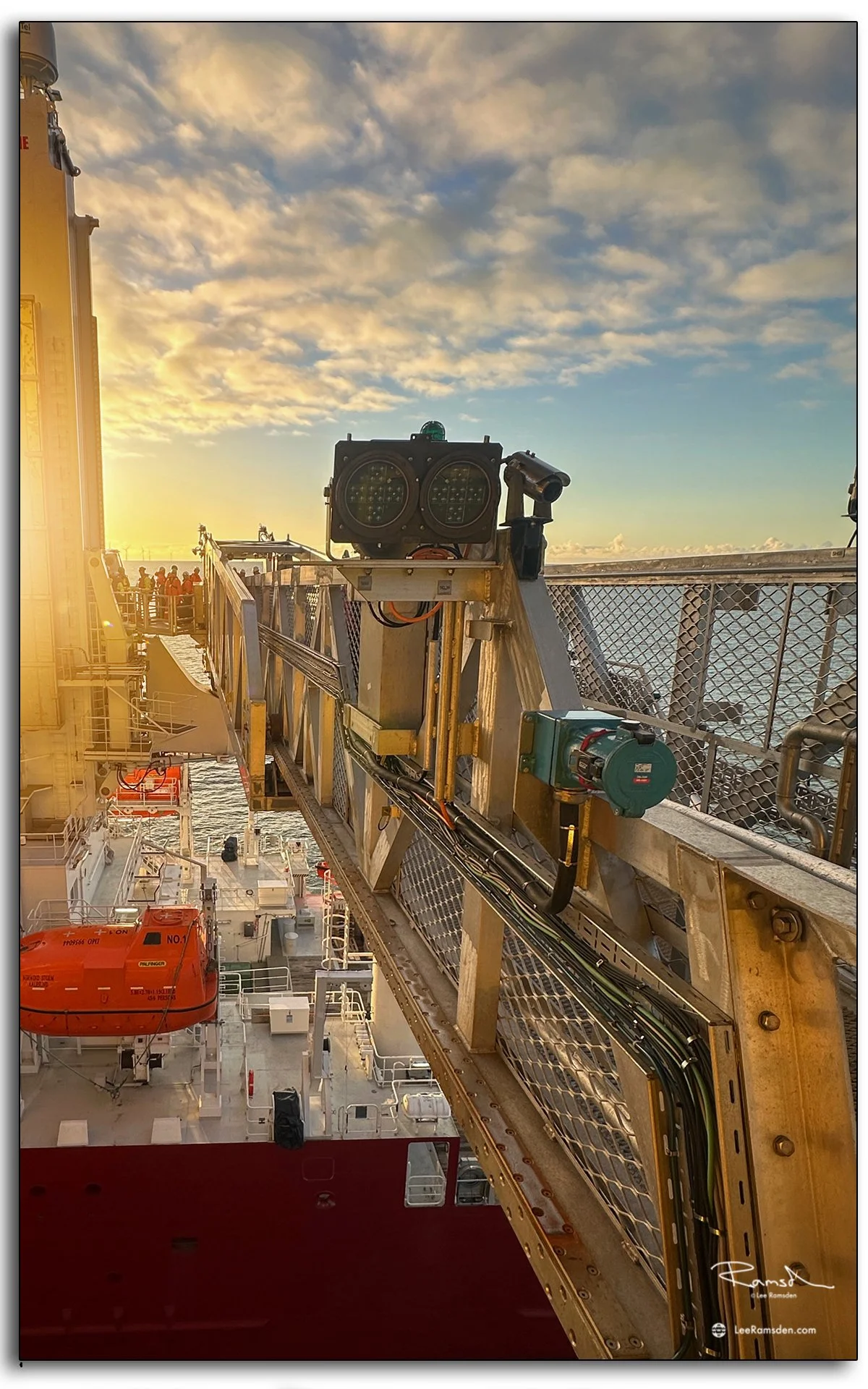
Side view of offshore Walk-to-Work bridge extended to platform, photographed at sunrise.
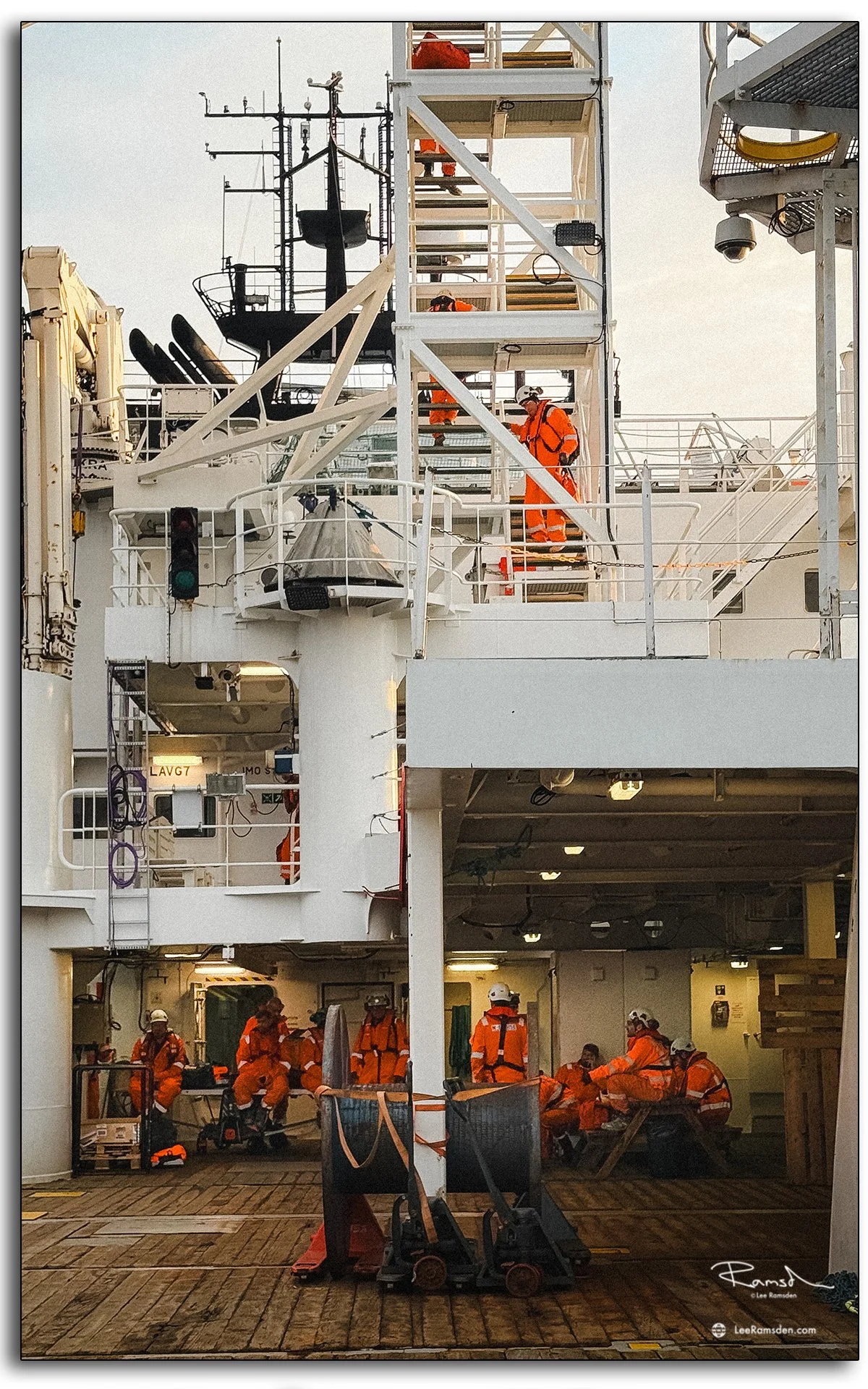
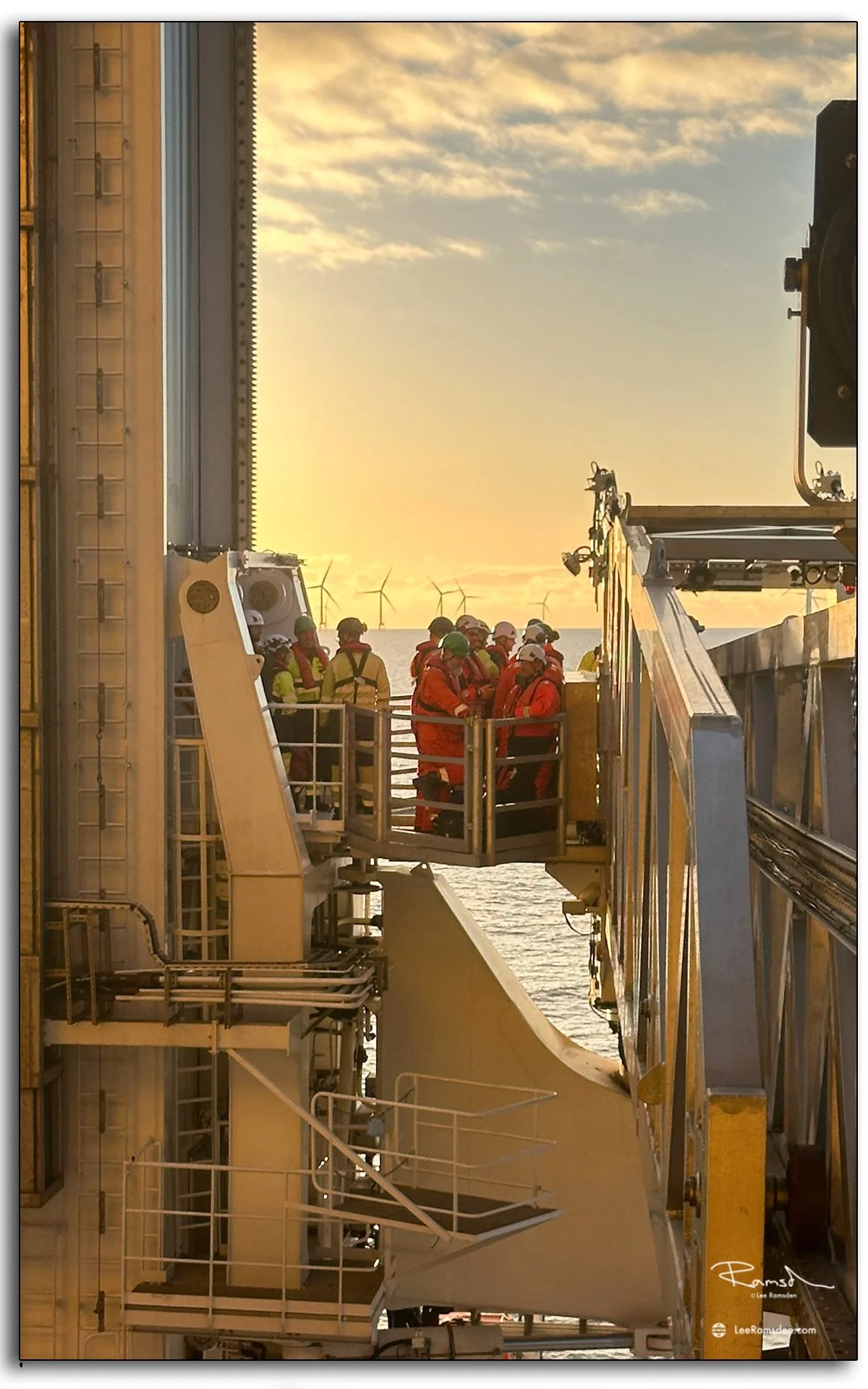
Offshore crew gathered in PPE, preparing to transfer via Walk-to-Work bridge.

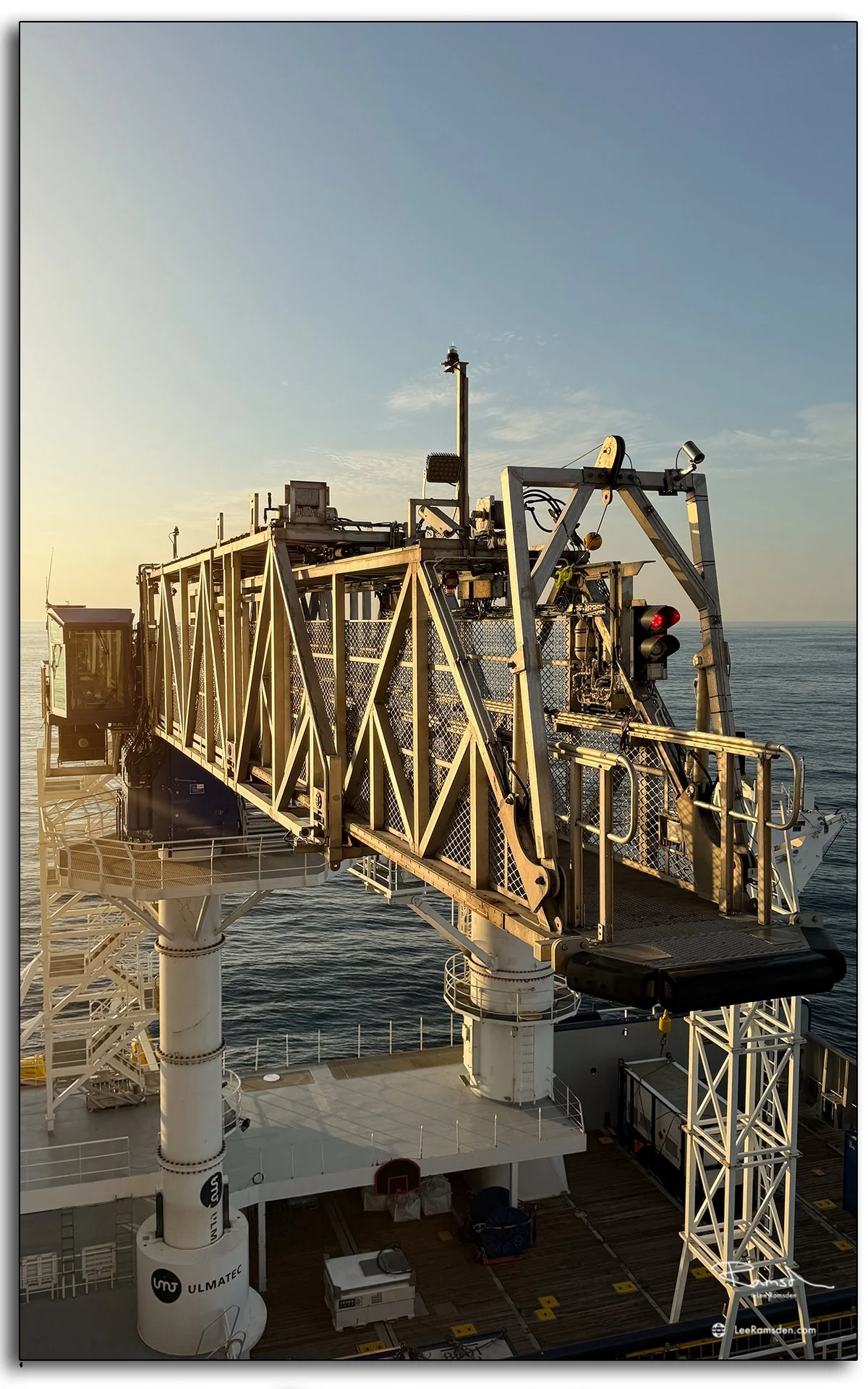
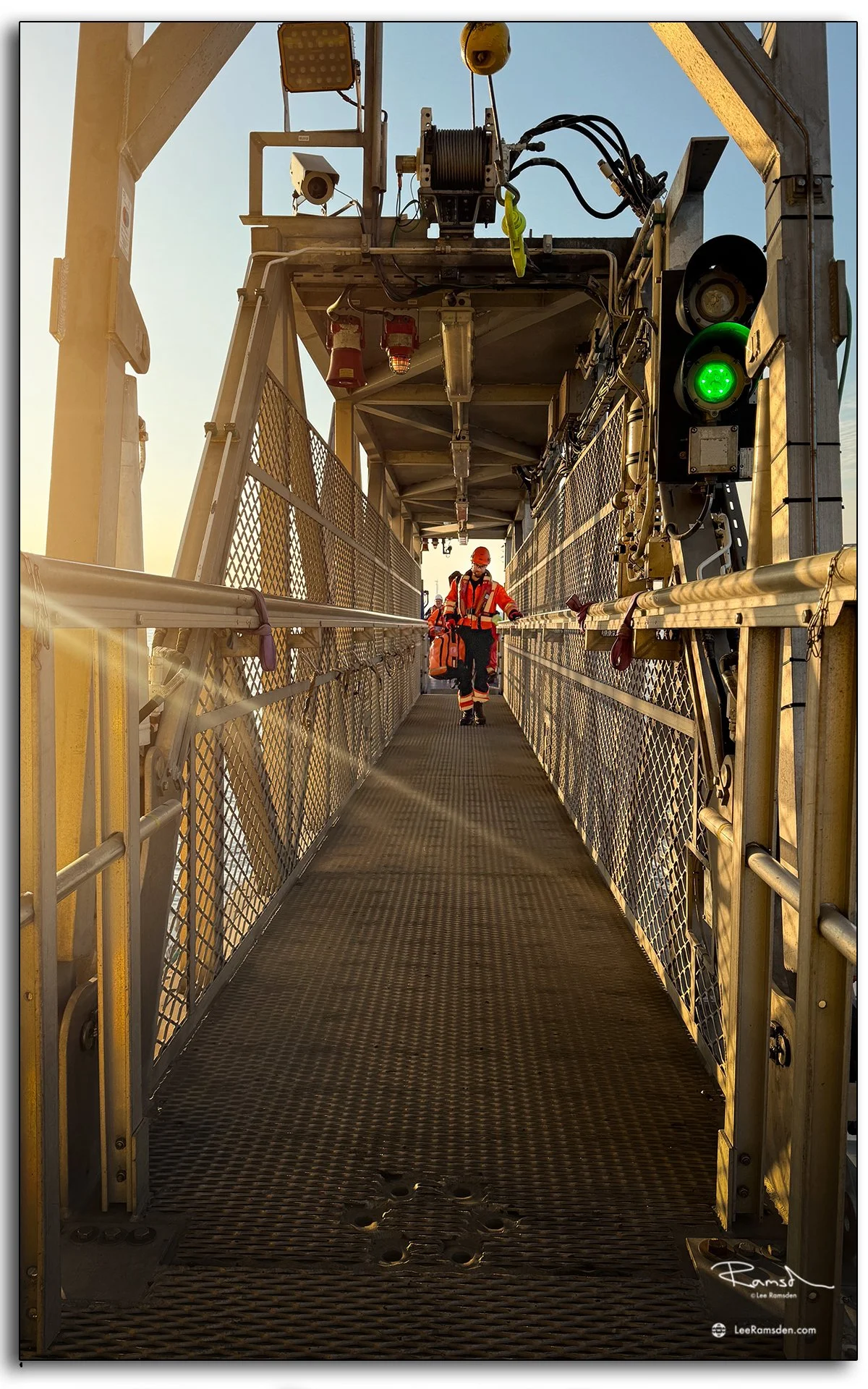
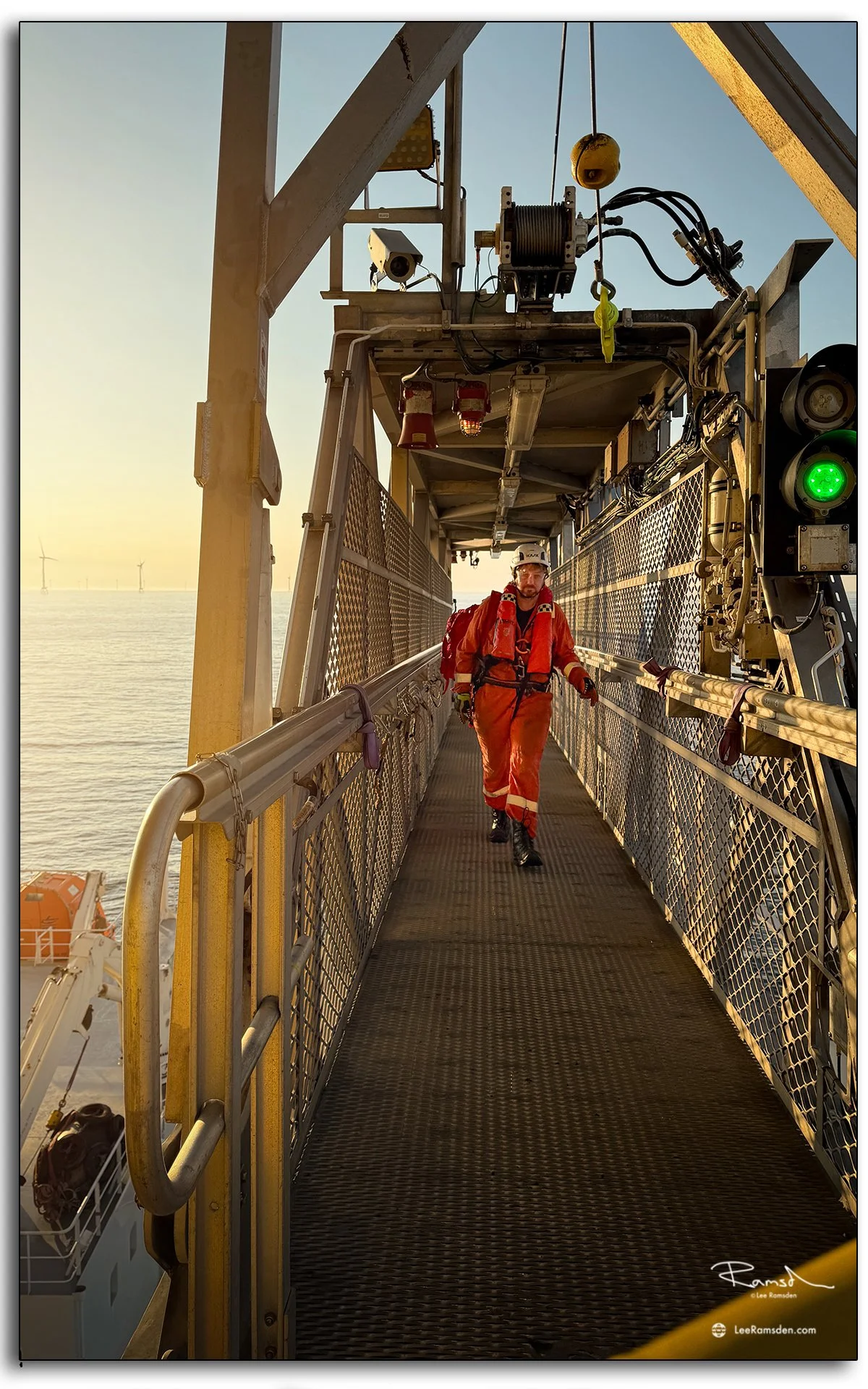
Crew transfers offshore are all about routine, discipline, and trust in the equipment. These images show the daily process of moving between vessel and platform via the Walk-to-Work bridge.

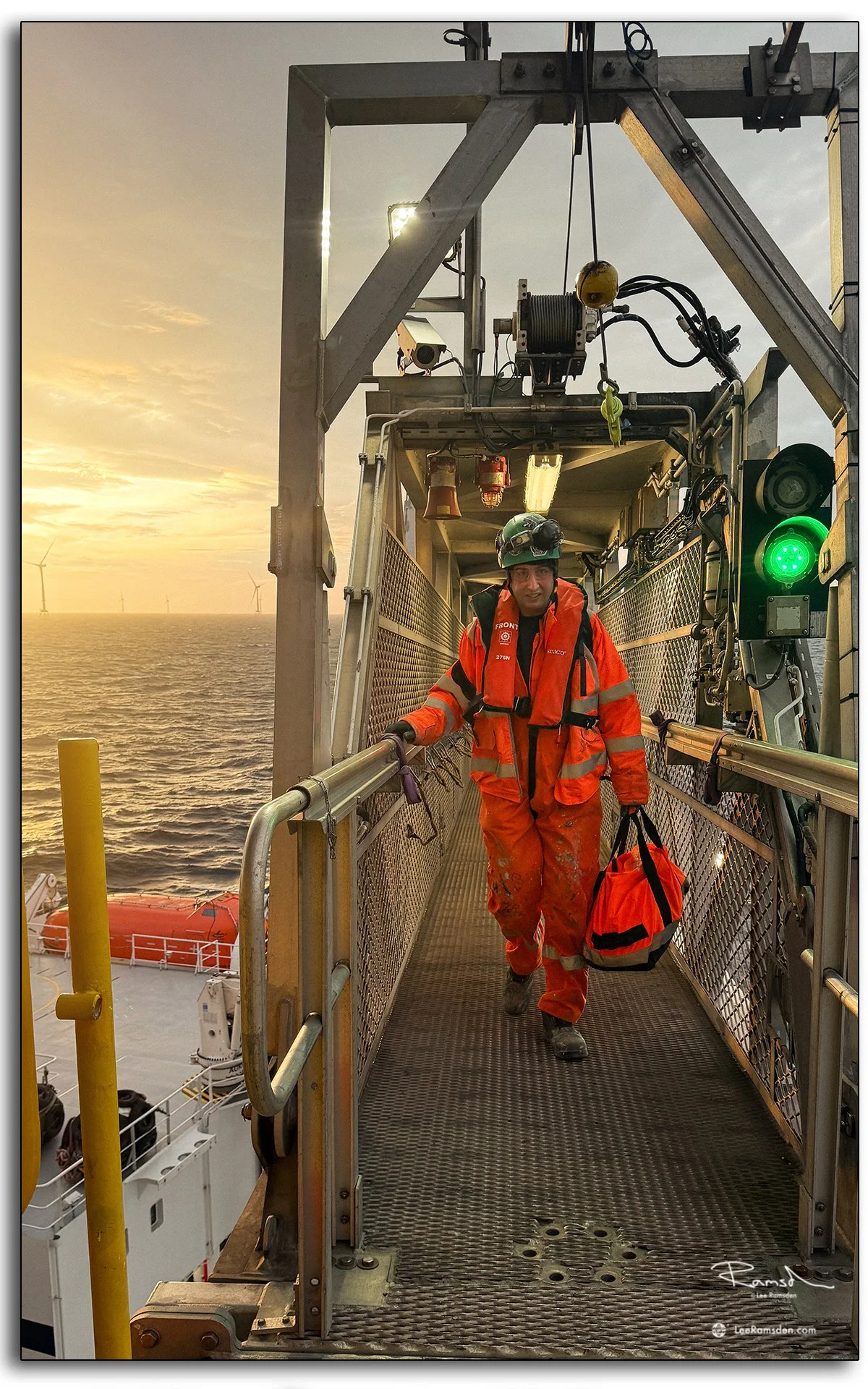
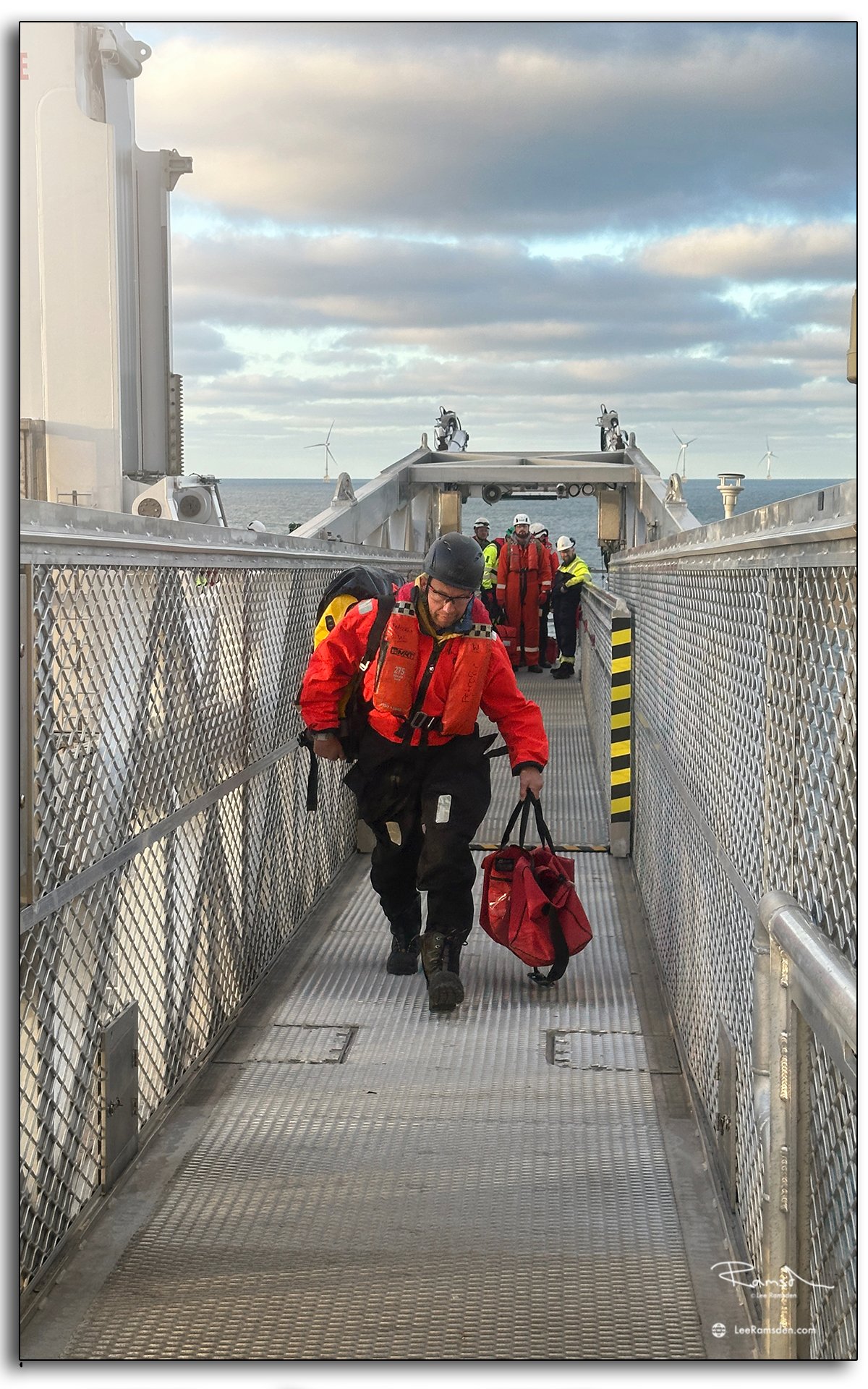
Offshore worker in survival suit crossing Walk-to-Work bridge in calm sea conditions.
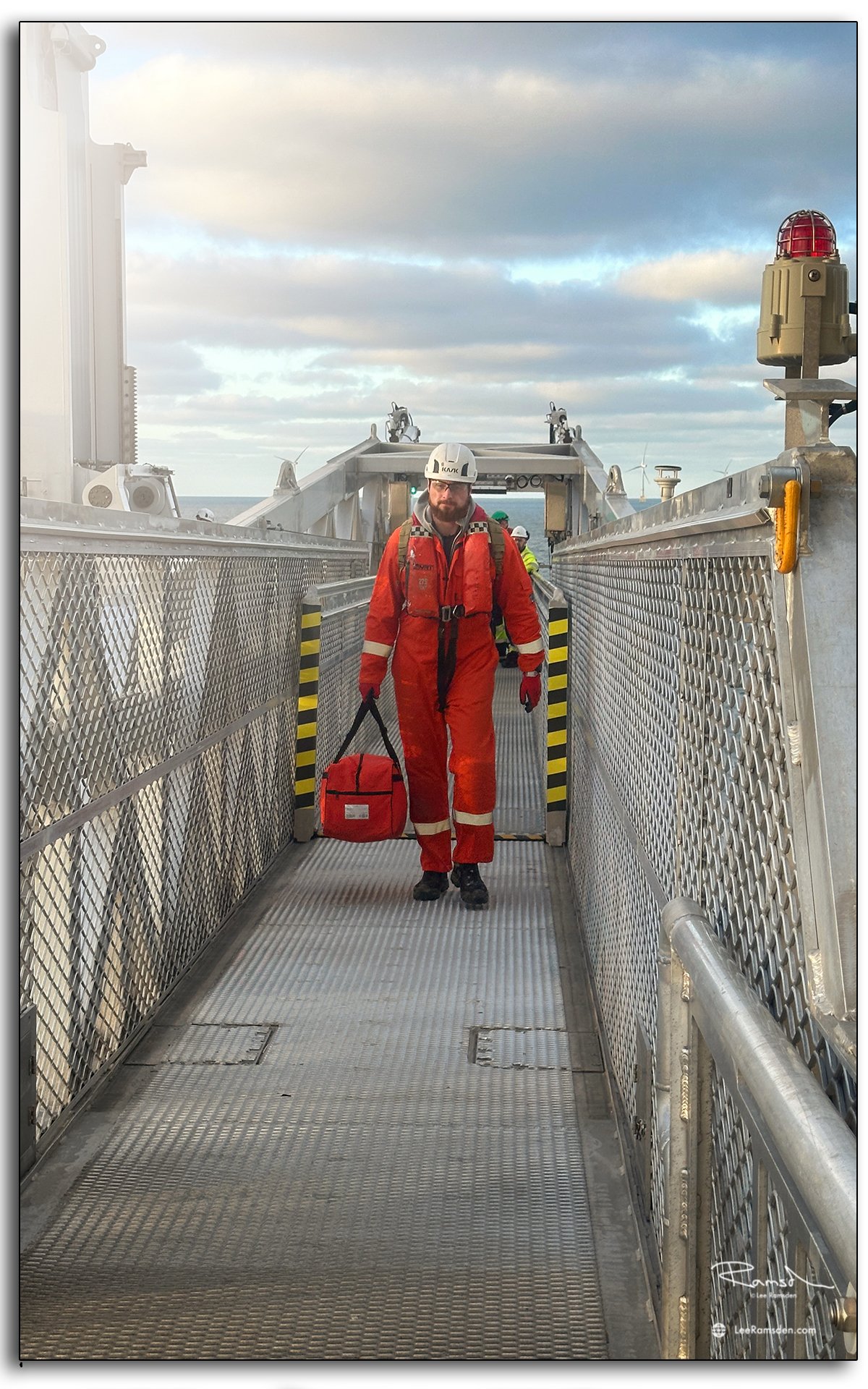
Worker crossing Walk-to-Work bridge at sunrise, with offshore crew waiting behind.

The W2W system is straightforward in purpose: to give workers safe access. These photographs focus less on the structure and more on the people — the steady flow of personnel, kit bags in hand, crossing in both directions. It’s a reminder that offshore operations are built on repetition and reliability, not just engineering.

This series continues my documentation of offshore work and life at sea. For more, visit my Wind Industry and Industrial galleries.

Crew Transfer Vessels in Offshore Wind: Farra Grainne at Work

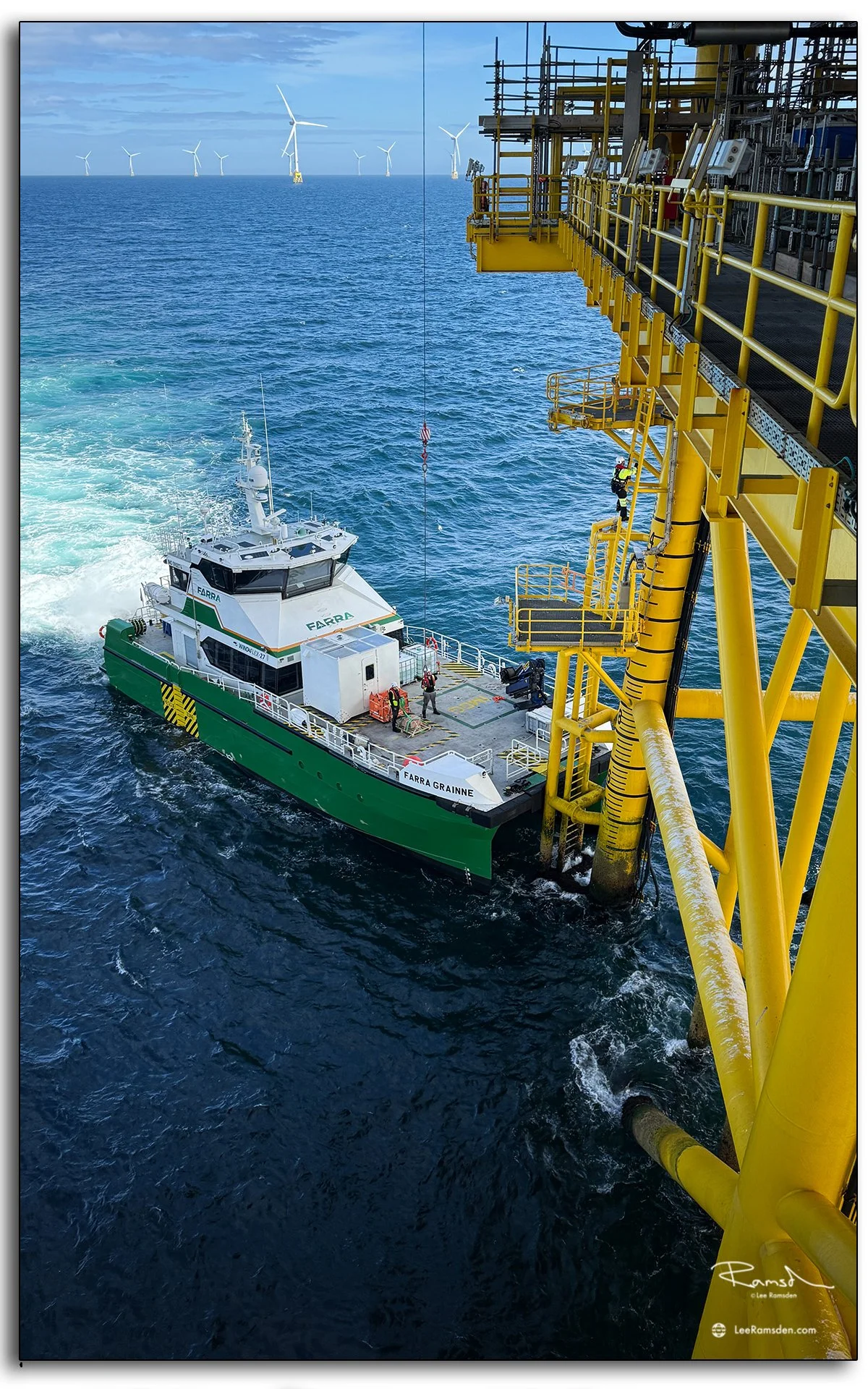
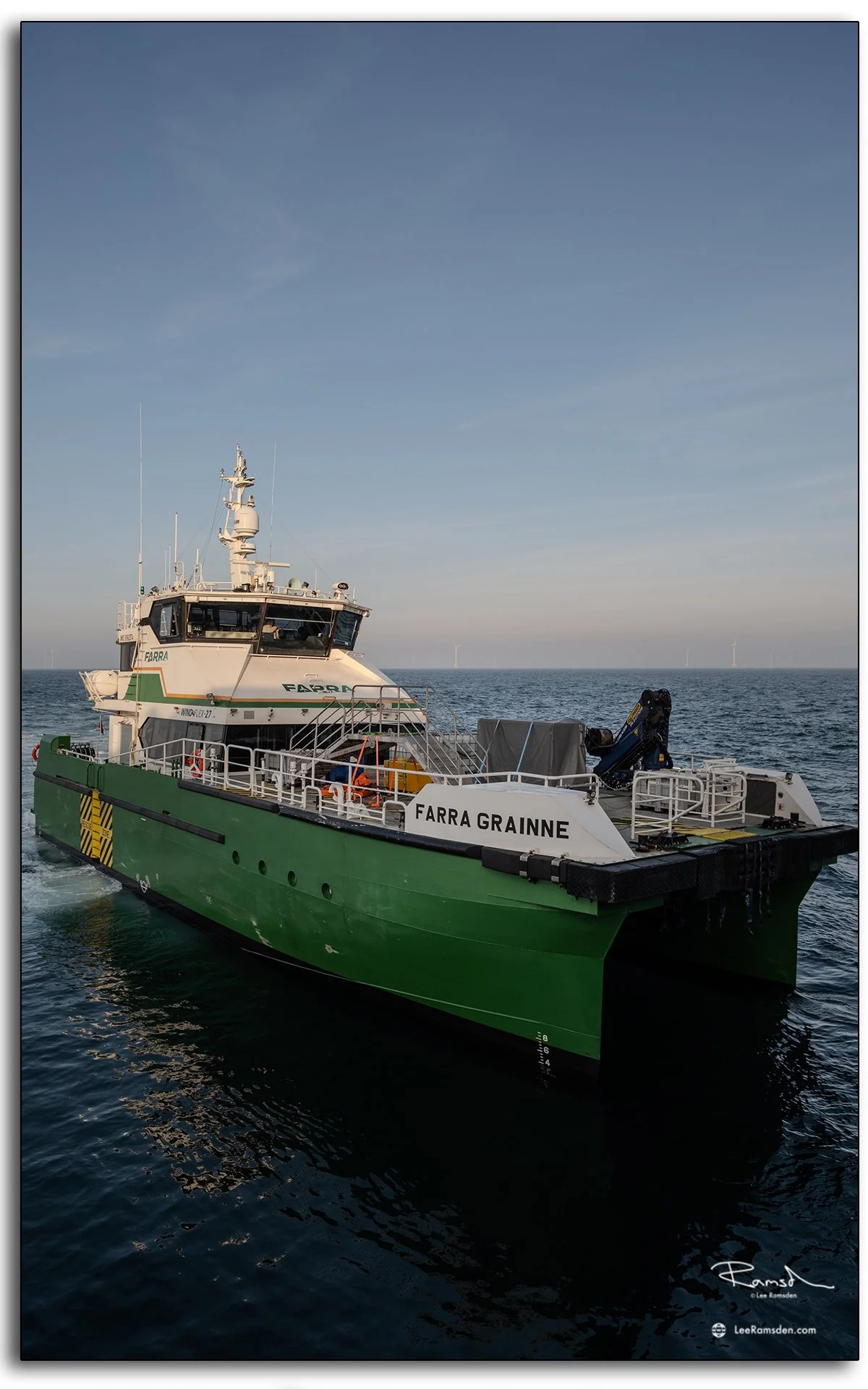
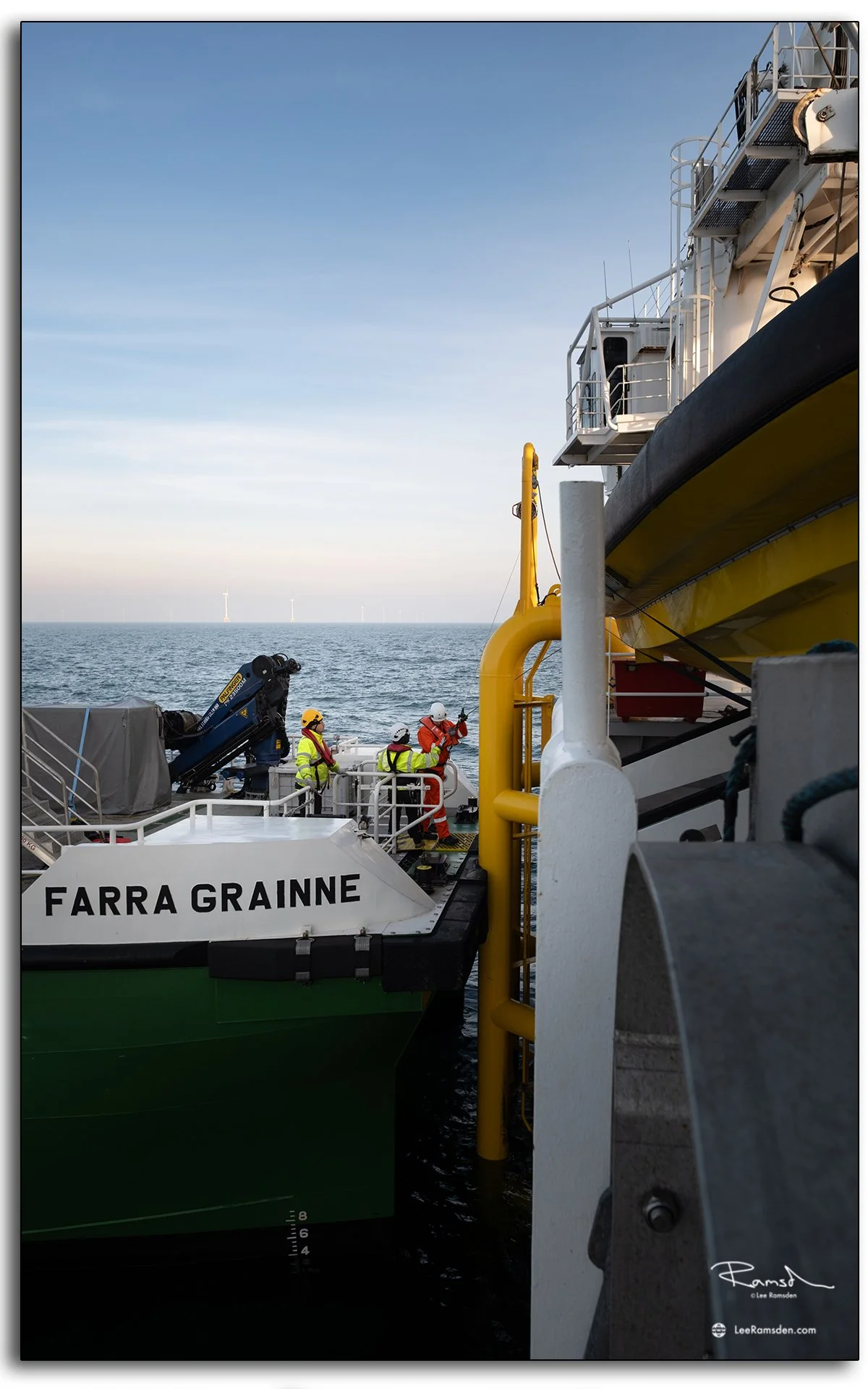
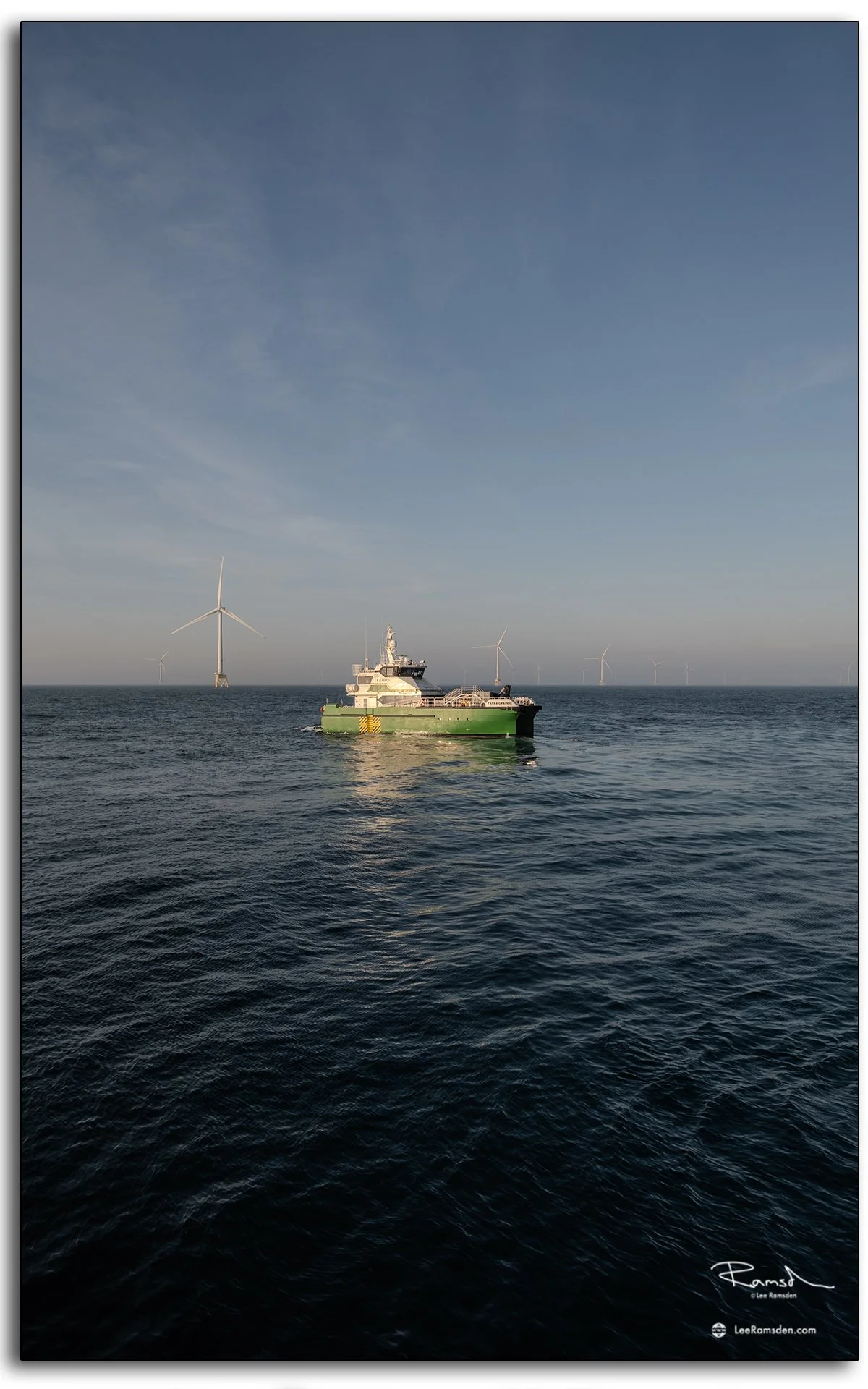
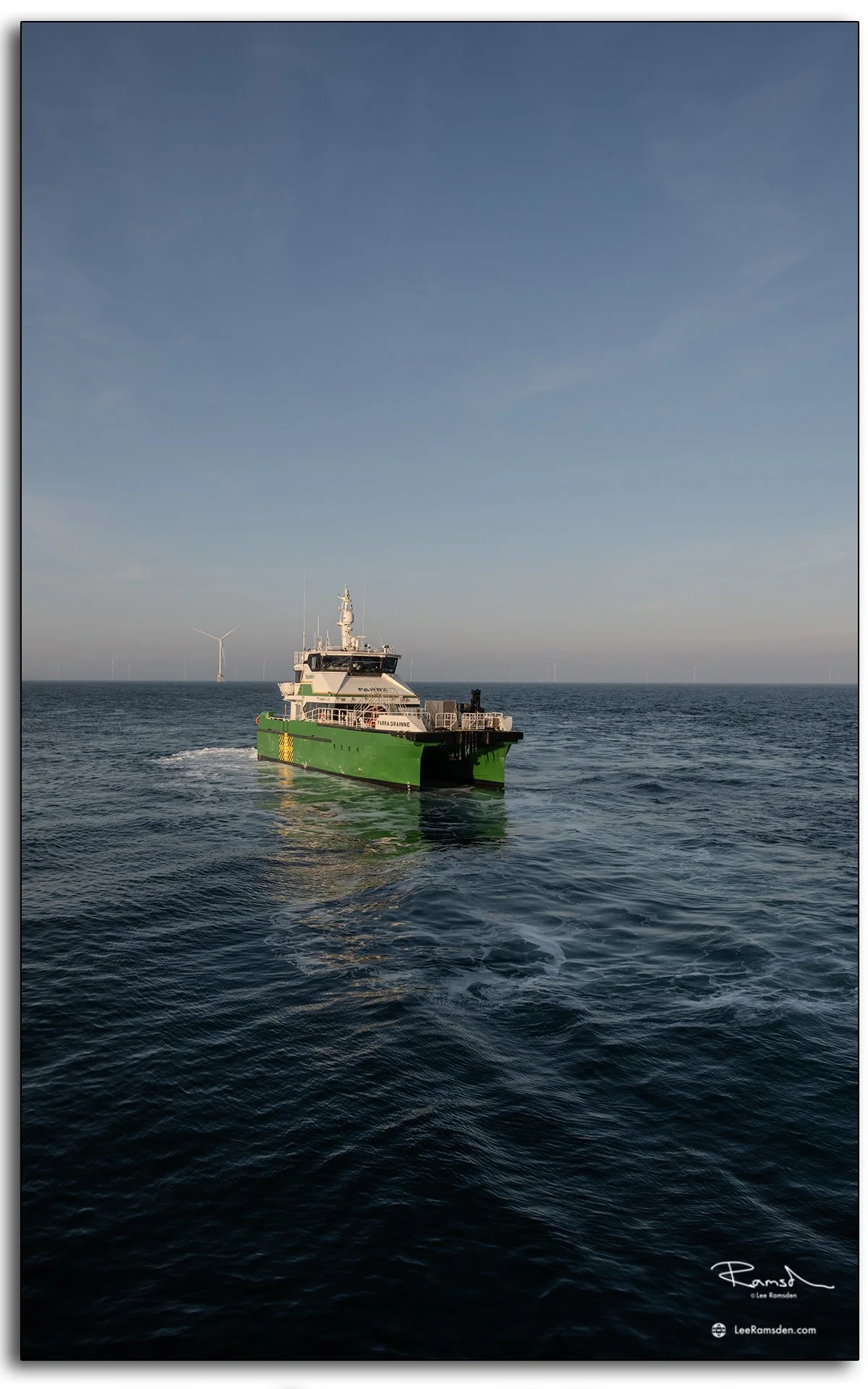
These images focus on the Farra Grainne, a crew transfer vessel working offshore within a wind farm environment. Taken in calm conditions and clear light, they show the vessel in a few different contexts: close alongside, moving away through the field, and positioned next to the structure during transfer operations.

In offshore wind, crew transfer vessels, usually shortened to CTVs, are a core part of daily operations. Their job is to move technicians and small teams between shore or a mothership base and offshore assets such as turbines and substations. They are specifically designed for that role, and in many projects they remain the preferred transfer solution for sites closer to shore. 

The transfer itself is one of the most important parts of the process. Industry guidance from G+ and the Energy Institute is built around the principle that people should not fall into the sea or become trapped between the vessel and the offshore structure during transfer. That is why vessel design, operating procedures, competence and transfer arrangements matter so much. 

It is easy to look at a wind farm and focus only on the turbines, but the day-to-day operation relies on far more than that. CTVs are one of the clearest examples. They are there to move people, equipment and capability around the site, and without them a lot of offshore maintenance simply would not happen in the same way. General guidance on offshore wind service vessels also notes that CTVs are designed specifically to transport service teams and are commonly fitted for transfer work against offshore structures. 

Vessel Operations Offshore

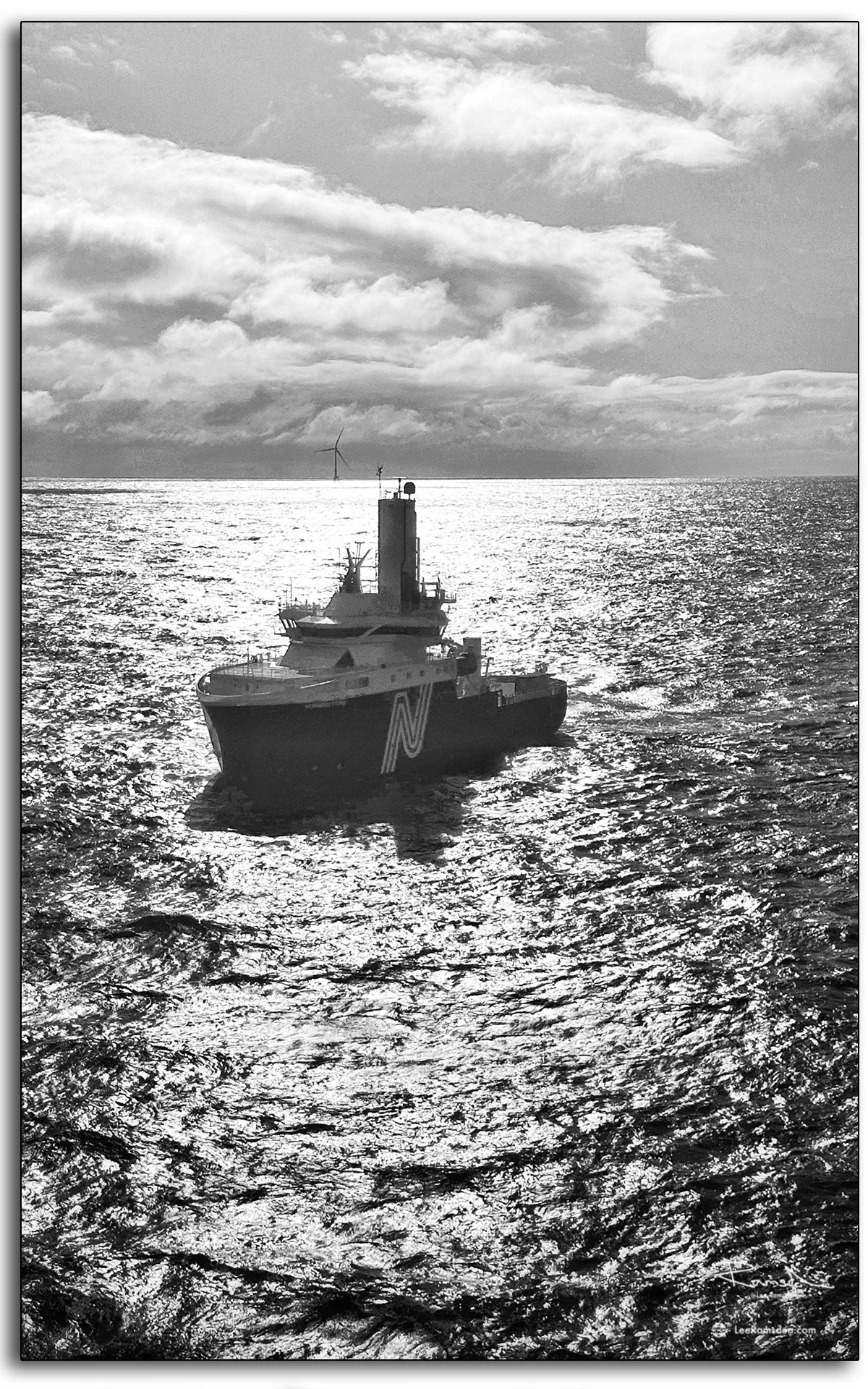
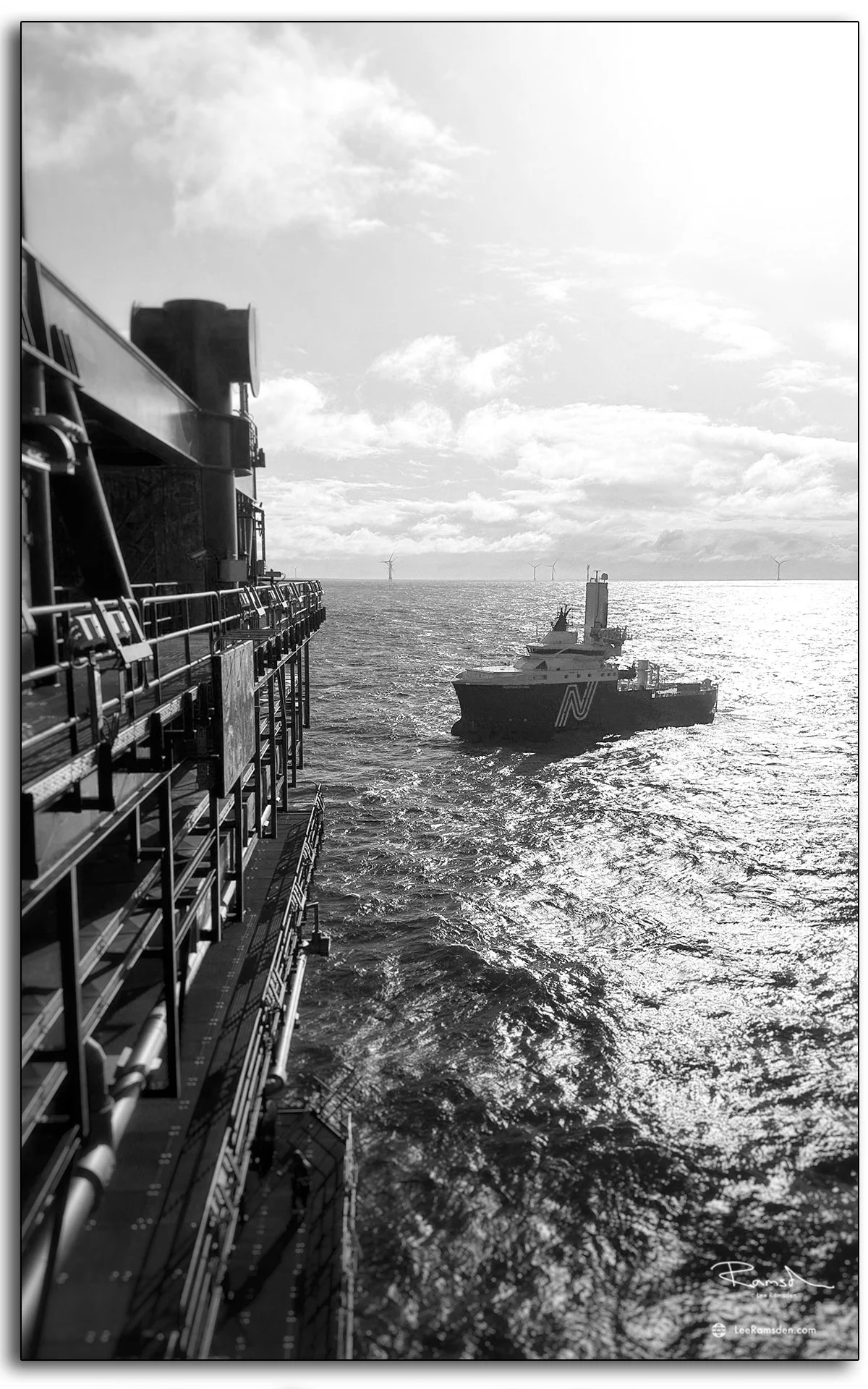
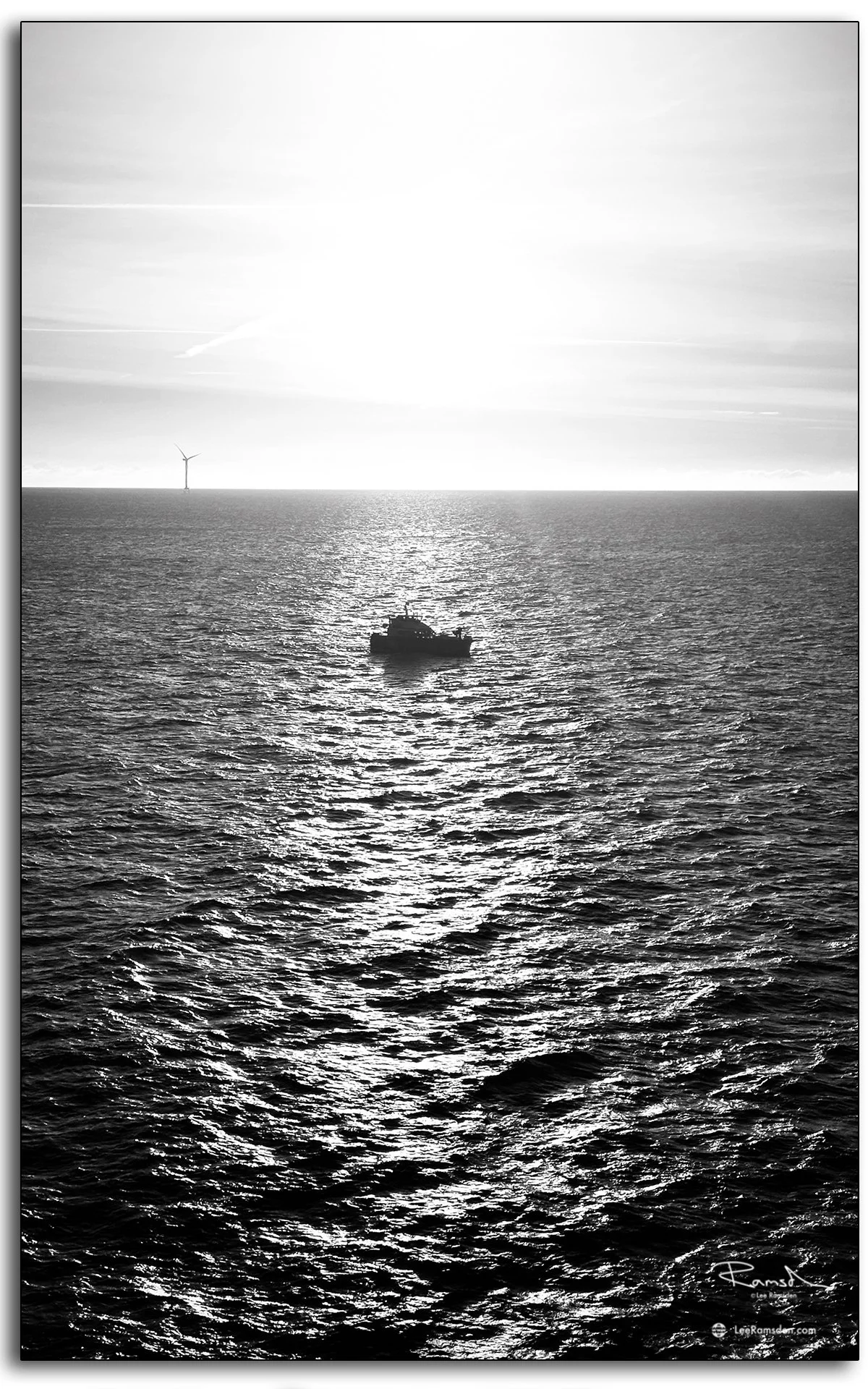
Out in the North Sea, the Norwind Storm support vessel takes up position beneath the setting sun — a steady presence against the rolling water and the turbine structures beyond.

These images show the vessel in its working context, sitting alongside the wind farm and substation, with the horizon fading into haze. The black and white treatment suits the industrial scale of the scene, stripping away colour to leave structure, light and movement.

Service operations vessels are a core part of offshore wind O&M. They provide accommodation and logistical support for technicians working on turbines and substations, often remaining on site for extended periods during maintenance campaigns.

This series adds to my Wind Industry collection, alongside wider work across Industrial and Places photography.

Accommodation vessel.

01 Prosafe, Safe Boreas, accommodation, vessel, navy, merchant, hotel, living quarters, sunset, north sea, extremee weather, lee ramsden, professional photography.jpg

Hello,

Hope that you are well.

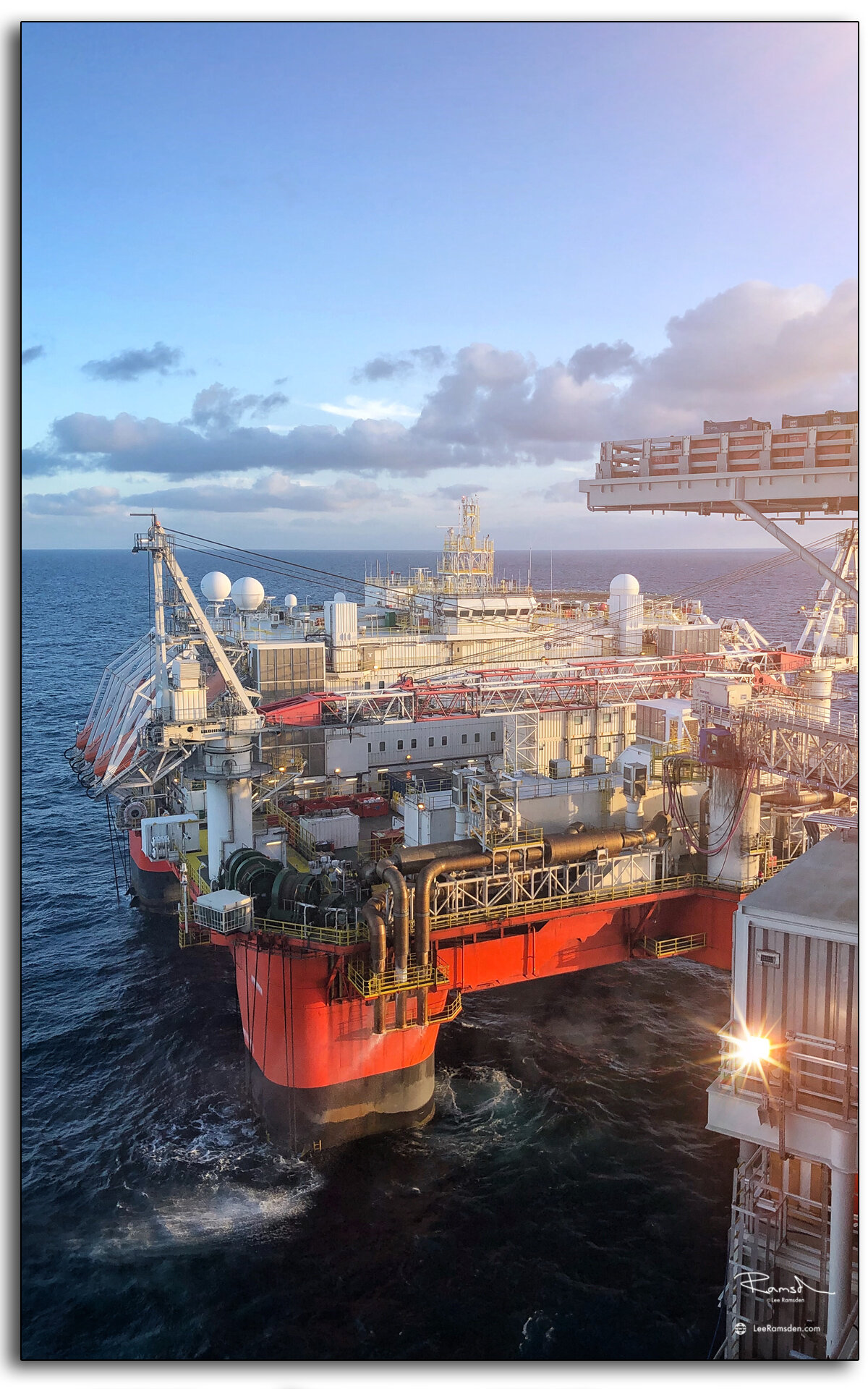
Today id like to share 3 more images of the Safe Boreas Flotel in the North Sea.

02 Prosafe, Safe Boreas, accommodation, vessel, navy, merchant, hotel, living quarters, sunset, north sea, extremee weather, lee ramsden, professional photography.jpg
03 Prosafe, Safe Boreas, accommodation, vessel, navy, merchant, hotel, living quarters, sunset, north sea, extremee weather, lee ramsden, professional photography.jpg

I asked the question to see if anyone could work out what camera these recent offshore oil and gas images were taken with..

All recent offshore images were taken with my iPhoneX.

The advancements of these cameras is phenomenal.

If you haven’t yet, be sure to subscribe to my monthly newsletter and would love to see what images you have achieved with your phones.

Lee

Prosafe - Safe Boreas

01 Prosafe, Safe Boreas, accommodation, bardge, flotel, Lee Ramsden, Oil and gas, platform, North Sea, uk, Scotland.jpg
02 Prosafe, Safe Boreas, accommodation, bardge, flotel, Lee Ramsden, Oil and gas, platform, North Sea, uk, Scotland.jpg
03 Prosafe, Safe Boreas, accommodation, bardge, flotel, Lee Ramsden, Oil and gas, platform, North Sea, uk, Scotland.jpg

Hello,

I want to share some images taken of an accommodation vessel..

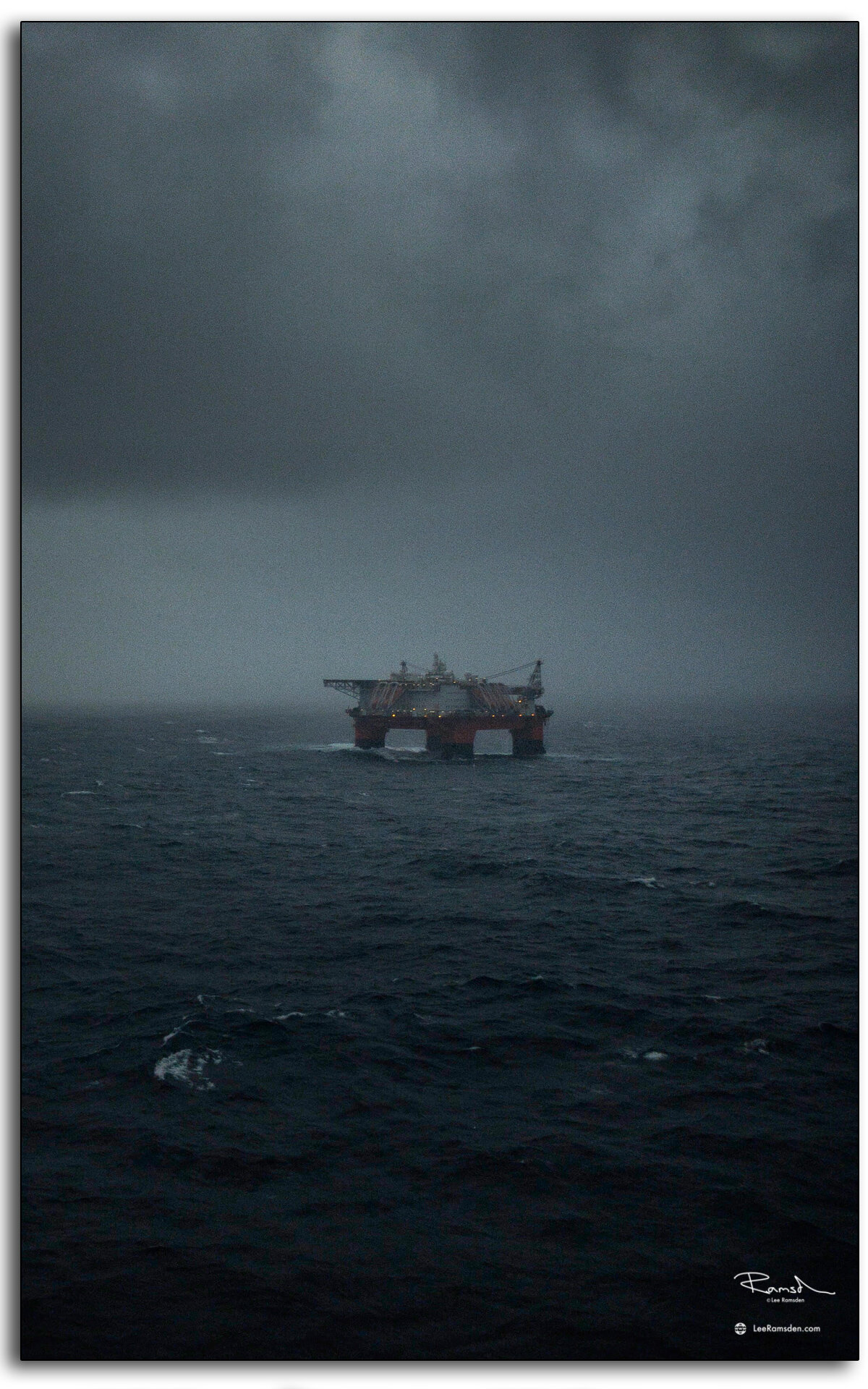
The Safe Boreas is the most advanced and efficient harsh environment accommodation vessel in the world, constructed to comply with Norwegian regulations.

The vessel has the capacity to accommodate 450 persons in single man cabins.

The layout of the unit is unique, with two large internal atriums allowing natural daylight into cabins, mess room and recreational areas.

The vessel is named after Boreas, the Greek god of the north wind and the bringer of cold winter air.

The name reflects that the vessel is designed for operating in the Norwegian and UK North Sea, a geographical area renown for its cold climate and harsh winters.

04 Prosafe, Safe Boreas, accommodation, bardge, flotel, Lee Ramsden, Oil and gas, platform, North Sea, uk, Scotland.jpg
05 Prosafe, Safe Boreas, accommodation, bardge, flotel, Lee Ramsden, Oil and gas, platform, North Sea, uk, Scotland.jpg
06 Prosafe, Safe Boreas, accommodation, bardge, flotel, Lee Ramsden, Oil and gas, platform, North Sea, uk, Scotland.jpg

Saipem S7000

S7000, duel crane, heavy lifting, offshore, oil and gas

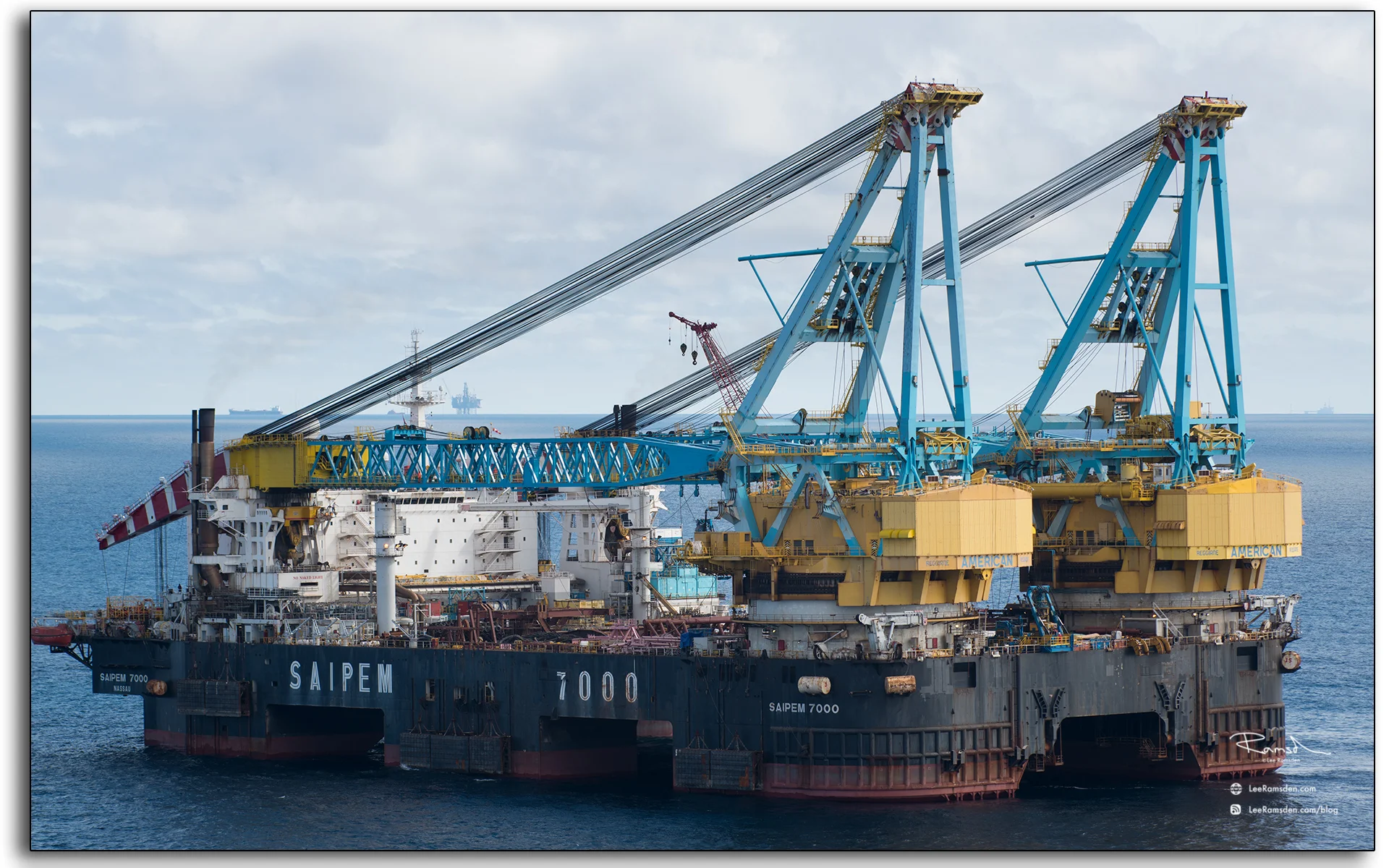
The Saipem S7000 arrives. 

With its state-of-the-art J-lay tower, upgraded dynamic positioning capability and fast ballasting system, the Saipem 7000 semisubmersible crane vessel has the capacity to handle the entire workscope of offshore construction developments worldwide, encompassing pipelaying in water depths greater than 2,000 metres and heavy lift operations up to 14,000 tonnes.


The vessel’s Class 3 DP system of 12 thrusters ensures that the vessel maintains good station keeping in the most difficult of weather conditions. Additionally, because the Saipem 7000 has accommodation facilities up to 725 people, the vessel can assist hook-up and commissioning as well as initial platform life support activities.

Altogether, this high specification means that the Saipem 7000 can be counted on to provide the highest level of reliability for conventional, deep and ultradeep water development projects.

Saipem, 7000, industrial, oil and gas, crane

VESSEL FEATURES

Length overall 197.95 m

Upper platform 175 m x 87 m x 8.5 m

Lower pontoons 165 m x 33 m x 11.25/15.25 m

Depth to main deck 43.5 m

Free deck area 9,000 sq.m

Deck load 15,000 tonnes

Operating draft 27.5 m

Survival draft 18.5 m

Transit draft 10.5 m

Transit speed 9.5 knots

Saipem, S7000, heavy lifting, vessel
blog, Saipem S7000, heavy lifting vessel, Norway, Stavanger
blog, Saipem s7000, taking image on iphone

Offshore standby vessel.

Blog, Standby vessel, ship, north sea, Grampain Dee, craig-group, craig group, oil and gas industry, Lee Ramsden, outboard cover, safety

In the UK oil and gas industry, it is a requirement for a standby vessel to be present. These vessels primarily cover helicopter operations and if any work has to be conducted where there is a potential to fail to sea. (known as outboard work). These vessels sit there, day in day out, no matter the weather they provide us with emergency cover and would spring to life and help rescue if the unlikely event ever arose. 

Grampian Dee, offshore, northsea stand by vessel

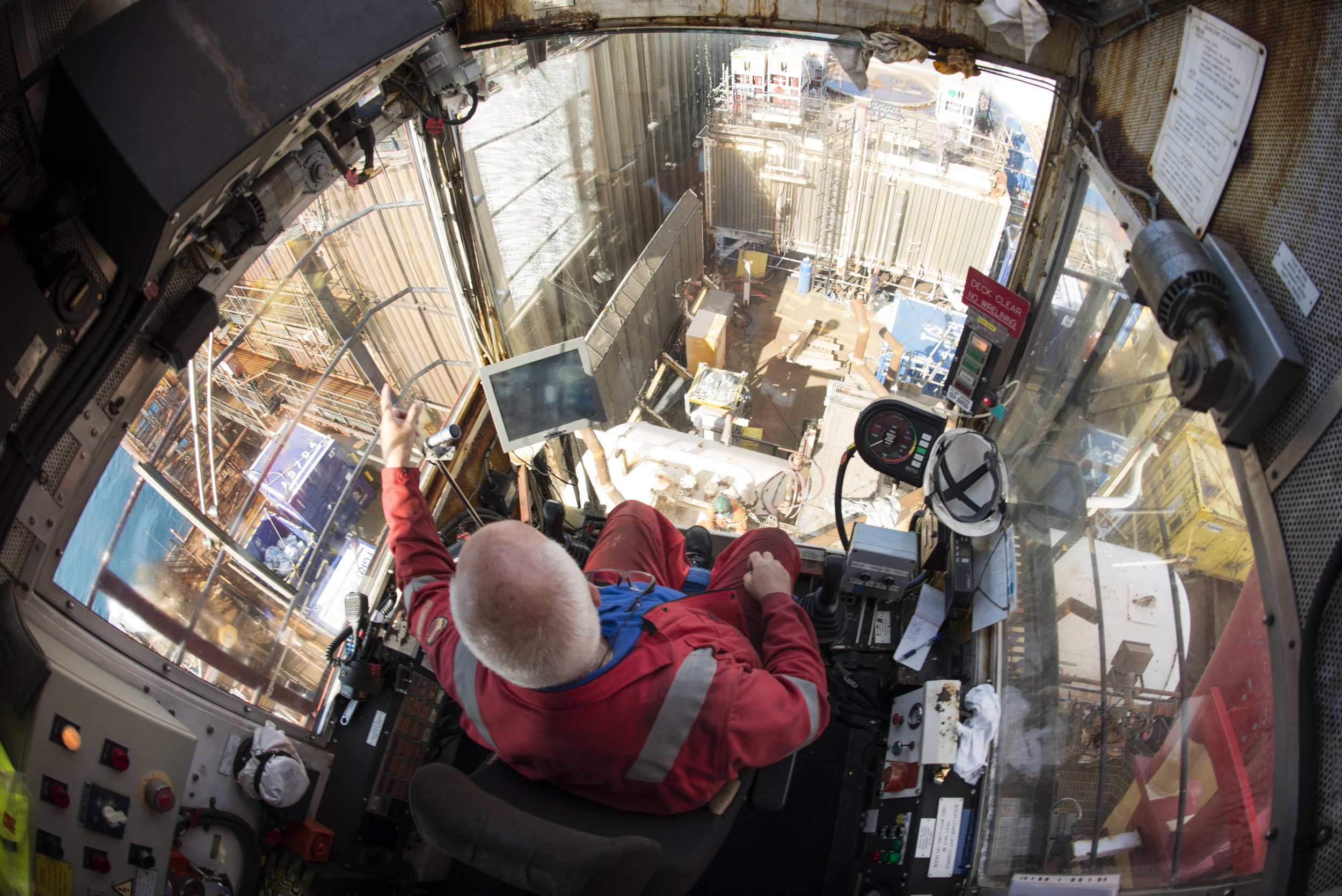
Crane operator, working the supply vessel.

blog, crane, operations, boat, ship, vessel, supply, norh sea, Sparow, BP Miller, Petrofac, Saipem, deck crew, loading handling, Aberdeen. 05

Hello, 

Today ill like to show how an oil rig offloads new supplies, which range from equipment, tools and most importantly food! 

blog, crane, operations, boat, ship, vessel, supply, norh sea, Sparows, Angus Taylor, Scottish, Scotland, BP Miller, Petrofac, Saipem, deck crew, loading handling, Aberdeen. 03
blog, crane, operations, boat, ship, vessel, supply, norh sea, Sparows, Angus Taylor, Scottish, Scotland, BP Miller, Petrofac, Saipem, deck crew, loading handling, Aberdeen. 04
blog, crane, operations, boat, ship, vessel, supply, norh sea, Sparows, Angus Taylor, Scottish, Scotland, BP Miller, Petrofac, Saipem, deck crew, loading handling, Aberdeen. 02
Crane Ops 01.jpg
load handler, hi-viz, vest, sign, oil rig, deck, banking, rigger, slinger, banksman, storeman, materials, coordinator, offshore, photo by Lee Ramsden.

While it is down to the crane operator to offload the containers from the supply vessel, it is all orchestrated by the offshore materials coordinator. 

The materials controller duties:

  • Arranging for the despatch and delivery of materials and goods

  • Making sure that materials and equipment have the necessary certification.

  • Ensuring that relevant stores are aware of deliveries and that they allocate space for goods on arrival.

  • Chasing up suppliers to ensure goods and materials are delivered on time to meet business needs.

  • Maintaining the materials management system.

  • Preparing reports on materials receipt and delivery and on the performance of suppliers

  • Acting as a focal point for suppliers and internal departments for questions about materials scheduling, problems, and the like.

offshore, north sea, crane, lifting containers, to the boat, supply vessel, oil and gas industry, photo by Lee Ramsden
offshore, container, materials, lifting, rigging, slinging, blue ISO container, waste, materials, scrap metal skip, BP miller, decommissioning, construction, oil and gas industry
North sea, supply vessel, crew, offshore, seamen, Norweigan, Norway, UK, Scotland, boat, ship, deck, deck crew, container, crane, operations, photo by Lee Ramsden.

Norwegian supply vessel crew, unhooking the containers. 

Load handler, Storeman, wokring the boat, materials coordinator, Ali Wilkinson, deck crew, oil and gas industry, north sea, Cape, professional photography by Lee Ramsden